

Five Ten Hellcat Shoes: Quick Product Overview
Can a $139.95 mountain bike shoe deliver enough control, grip, and durability for demanding enduro and downhill riding? The Five Ten Hellcat shoes make a credible case, but they are not aimed at riders who want the lightest, softest footwear for casual miles. adidas positions the Five Ten Hellcat Mountain Bike Shoes for both clipless and flat-pedal use, giving you more flexibility than a shoe designed around only one pedal system.
The supplied description identifies a wide, stiff construction, a controlled-pedal feel, durable and impact-resistant design, and all-conditions comfort. Those are useful specifications for rough terrain, technical descents, powerful pedal input, and riders who want one shoe to cover more than one setup. However, the listing does not provide a measured weight, closure specification, waterproof rating, cleat standard, star rating, or review count.
At the time of publication in 2026, the listed price is $139.95, with only 1 left in stock. That makes it sensible to verify the current price, size availability, seller details, and return terms before ordering rather than assuming the listing will remain unchanged.
The early takeaway is straightforward: the Hellcat is most compelling when you prioritise protection, stiffness, and grip over a lightweight cross-country feel. The product description supports that positioning; performance judgements below are identified as likely benefits rather than measured test results.
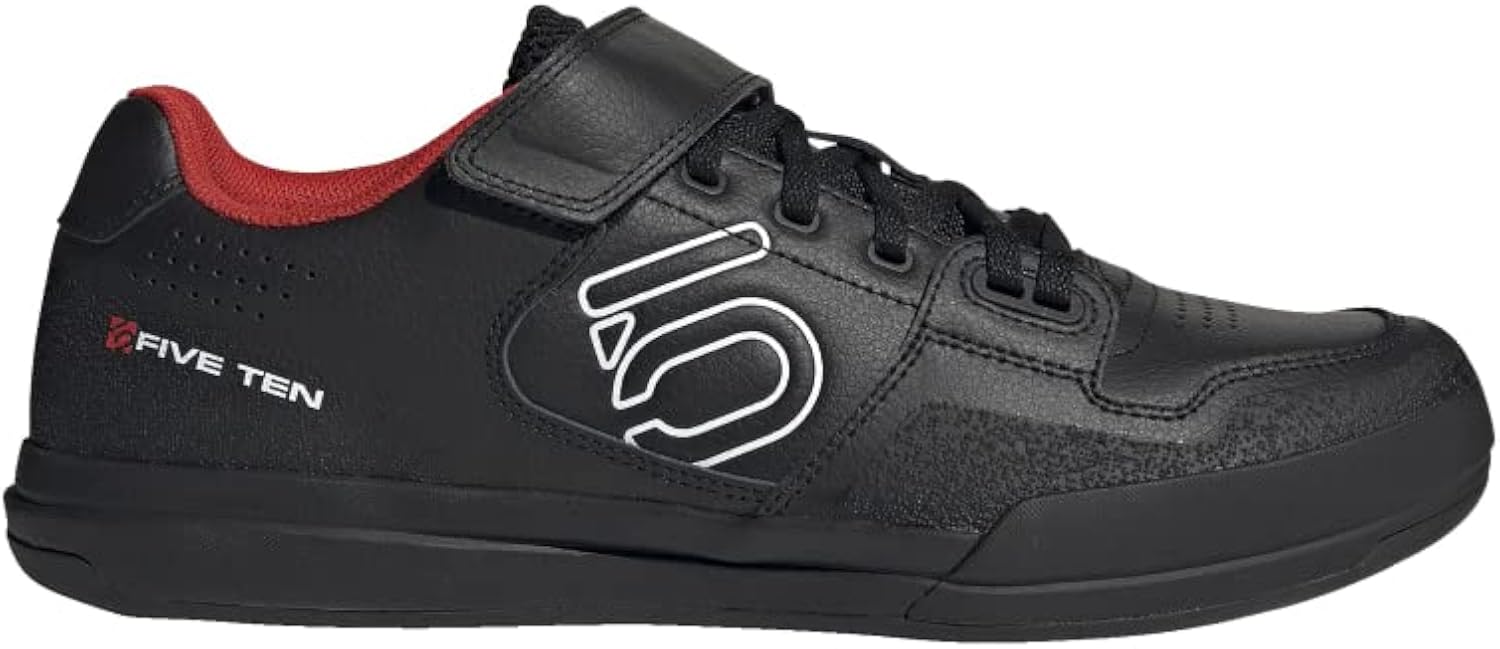
This image is property of Amazon.com.

Five Ten Hellcat Mountain Bike Shoes
$139.95
Only 1 left in stock – order soon.
As an Amazon Associate, I earn from qualifying purchases
Key Features of the Five Ten Hellcat Shoes
The central feature of the Five Ten Hellcat shoes is their stated combination of width and stiffness. A broader platform may suit you if narrow cycling shoes create pressure around the toes, while the stiff construction can limit unwanted flex when you accelerate, make a short climb, or brace your feet through repeated impacts. That does not guarantee better power transfer for every rider, but it explains why this design is aimed at enduro and downhill use rather than relaxed commuting.
Stiffness can also help maintain a more consistent relationship between your foot and the pedal under pressure. On a rough descent, that likely benefit is less about racing efficiency and more about keeping your foot supported when the bike is moving unpredictably. The trade-off is that a rigid shoe may feel less natural when you are walking or hiking with the bike.
adidas describes the shoes as suitable for both clipless and flat pedals. Your experience will depend on the pedal you choose, the cleat setup if applicable, and how much foot retention you prefer. A shoe that works with both systems is useful for riders changing bikes or experimenting with different setups, but it should not be assumed to feel identical to a dedicated flat-pedal shoe in every situation.
The durable and impact-resistant description is particularly relevant around rocky trails, bike contact, foot dabs, and repeated use in demanding terrain. It is a construction claim, not a published impact test or abrasion score, so you should treat it as an intended-use indicator rather than laboratory proof. The all-conditions comfort wording should be read in the same way: no waterproof membrane, insulation rating, breathability figure, or weather laboratory result is supplied.
One sustainability detail is confirmed. Twenty percent of the pieces used to make the upper contain a minimum of 50% recycled content, as part of adidas’s effort to reduce plastic waste. This does not mean the entire shoe is made from recycled material, nor does it provide a complete environmental assessment. It is one material detail alongside the shoe’s fit, durability, repairability, and expected service life.
Use this simple care routine after each ride:
- Inspect the outsole and upper for cuts, loose sections, or damage.
- Remove grit embedded around the cleat area before it hardens or interferes with fitting.
- Brush away mud and let the shoes dry naturally in a ventilated place.
- Avoid direct heat, which can stress adhesives and alter materials.
How the Five Ten Hellcat Shoes Perform on the Trail
The Five Ten Hellcat shoes are best assessed by separating descending, pedalling, technical terrain, and off-bike movement. The available specifications point toward a stable, protective trail shoe, but they do not include independent measurements for grip, sole flex, impact resistance, or wet-weather performance. Any advantage described here is therefore a likely result of the stated construction, not a measured test result.
For downhill riding, the stiff and impact-resistant build should help you maintain a more stable foot position when the trail becomes rough and the bike delivers repeated hits. That can be valuable when you are absorbing impacts, correcting a line, or using your feet to brace the bike. It will not remove the need for correctly positioned pedals and sound technique, but a supportive shoe can reduce the feeling that the footwear is folding under pressure.
For enduro, the appeal is the balance between pedal control and protection. The same stiffness that may help transfer force during a hard acceleration can make long hike-a-bike sections feel less flexible. If your routes include substantial walking, consider whether trail control matters more to you than a natural off-bike stride.
Flat-pedal riders should judge grip through actual outsole contact, pedal-pin engagement, and how easily the foot can be repositioned. Do not assume a shoe described as compatible with flat pedals will feel exactly like a purpose-built flat-pedal model. Clipless riders should set cleat alignment, release tension, and fore-aft position before deciding whether the shoe feels controlled or uncomfortable; poor setup can disguise a fit or pedal problem as a footwear problem.
The listing promises all-conditions comfort, but there is no waterproof rating, membrane specification, or laboratory test result. You can reasonably expect the design to be intended for variable trail conditions, yet you should not treat it as confirmed waterproof or insulated footwear.
Test the shoes progressively:
- Start indoors and check basic foot stability.
- Use a familiar trail with a short climb and a controlled descent.
- After riding, check for hot spots, heel movement, sole flex, and unusual foot fatigue.
- Repeat with your normal socks and pedal setup before committing to a full-day ride.
This approach gives you useful evidence without blaming the shoe for an unsuitable cleat position, pedal interface, or size.

Fit, Sizing, and Everyday Comfort Considerations
The listing’s most relevant fit clue is that the Five Ten Hellcat shoes are described as wide. That may help if standard cycling shoes squeeze your forefoot, but it could leave a narrow foot feeling loose. Width alone does not determine comfort. You still need a secure heel and midfoot, with enough room for your toes to move naturally without sliding inside the shoe.
Before ordering, compare your measurements with the seller’s current size chart and read the return policy. This matters especially when only 1 pair is shown as remaining, because a low-stock listing may make an exchange less convenient. Measure both feet at the end of the day while wearing the socks you intend to use for riding, then select the size that accommodates the larger foot.
Long-ride comfort depends on several small pressure points rather than one headline specification. Consider how the closure presses across the top of your foot, whether the toe area allows movement, how firmly the heel stays planted, and whether your feet swell during sustained efforts. The product data does not identify a precise closure type, so you should assess adjustability in person or through the seller’s current listing rather than assuming a particular system.
Perform the first fitting indoors. Stand on the pedals or imitate that position and check for heel lift, toe contact at the front, side pressure, uneven arch pressure, and movement from side to side. A short break-in period may allow normal material adjustment, but sharp pressure points, numbness, or persistent rubbing are reasons to stop and reassess the size or shape.
If you have a narrow foot, do not solve obvious movement by simply tightening the shoe until circulation suffers. Try the intended riding socks and make small fit adjustments first; if the heel still lifts or the foot shifts laterally, the wide last may simply be the wrong shape for you.
What Customers Are Saying About the Five Ten Hellcat Shoes
No verified customer star rating or review count was supplied with the product data available for this review. I therefore cannot responsibly claim that the Five Ten Hellcat shoes are rated a particular number out of five, nor can I present a repeated buyer pattern as established evidence. That limitation matters: customer feedback can reveal sizing problems, cleat-installation issues, or long-ride discomfort that a product description does not show.
There is also no verified review record here that can be separated into repeated comments and isolated complaints about width, stiffness, pedal control, grip, durability, impact protection, ventilation, wet-weather use, or compatibility with both pedal systems. Those subjects are worth investigating on the live listing, but inventing consensus would make the review less useful.
When customer reviews are available, give greater weight to detailed comments that identify the rider’s pedal system, terrain, ride length, weather, and usual shoe size. A statement such as “comfortable” means little without context. A rider using clipless pedals on short bike-park laps may reasonably report a different experience from someone walking for hours during an enduro event.
Review disagreements can be legitimate. Foot shape, sock thickness, cleat position, release tension, riding temperature, and expectations for walking all change the result. Also check whether a comment refers to the current colourway or generation; reviews attached to an older version or unrelated variant may not describe the pair you are considering.
For your own research, read the newest comments first, filter for enduro or downhill use, compare feedback from riders with similarly shaped feet, and look for photographs or detailed fit descriptions. Until those verified figures and patterns are available, the confirmed construction claims should carry more weight than uncheckable praise or criticism.

This image is property of Amazon.com.

Five Ten Hellcat Shoes Compared With Alternatives
The Hellcat occupies a specific middle ground: it is designed for rough-terrain control, described as wide and stiff, and positioned for either clipless or flat pedals. The alternatives below serve different priorities. Their current listed prices were not included in the supplied product data, so they are marked as unavailable rather than guessed; listing prices can change.
| Model | Riding style | Pedal priority | Fit emphasis | Terrain focus | Current listed price |
|---|---|---|---|---|---|
| Five Ten Hellcat Mountain Bike Shoes | Enduro and downhill | Clipless or flat | Wide, stiff platform | Rough and technical trails | $139.95 |
| adidas Five Ten Freerider Pro | Aggressive trail and bike park | Flat-pedal use | Flat-pedal shoe fit | Trails and descents | Not provided |
| Shimano SH-RP101 High Performing All-Rounder Cycling Shoe | Road and general cycling | Road-style pedal efficiency | Road-shoe fit | Pavement and light recreational use | Not provided |
| Fizik Men’s Vento Omna Wide Road Bike Shoes | Road riding | Road pedal efficiency | Wide road fit | Pavement and sustained road efforts | Not provided |
Choose the Freerider Pro when flat-pedal use is the central requirement and you do not need the Hellcat’s stated dual-system positioning. The Shimano SH-RP101 is more relevant when efficient road pedalling matters more than downhill impact protection or flat-pedal versatility. The Fizik Vento Omna Wide is the more logical direction if you want a wide road fit for sustained pavement riding.
The Hellcat’s differentiating proposition is not that it is universally superior. It is that one wide, stiff, durable, impact-resistant design is intended to support demanding trail control with either pedal approach. Your dominant terrain and pedal system should decide the purchase, not brand familiarity alone.
Who Should Buy the Five Ten Hellcat Shoes?
The best match is an enduro or downhill rider who wants a supportive, stiff shoe with impact resistance and enough grip for either clipless or flat-pedal riding. The Five Ten Hellcat shoes also make sense for riders who prefer a roomier shape and want controlled support when pushing hard through rough terrain rather than the soft flexibility of a casual or commuter shoe.
Occasional bike-park riders and aggressive trail riders may appreciate having one pair for different bikes or pedal arrangements. Riders moving between clipless and flat pedals can also find the dual-use positioning practical. That usefulness still depends on your actual pedal setup and whether the fit keeps your foot stable.
There are clear mismatches. Lightweight cross-country racers may prefer footwear built around lower weight and efficient long-distance pedalling. Road cyclists should look toward road-specific options, while riders who spend long periods walking may find a stiffer trail shoe less comfortable than footwear designed for hike-a-bike movement.
If you have narrow feet, pay close attention to heel hold and side-to-side movement. A wide construction may work with different sock choices, but persistent looseness is a sign that the shape may not suit you.
Use this decision sequence before paying:
- Define your dominant terrain: road, cross-country, trail, enduro, or downhill.
- Identify whether you need clipless compatibility, flat-pedal grip, or both.
- Decide how much impact protection and stiffness you actually use.
- Confirm that a wider fit matches your foot shape.
- Compare the $139.95 commitment with the cost of a more specialised alternative.
Summary: the Five Ten Hellcat Mountain Bike Shoes are aimed at riders who value control and protection on demanding trails more than minimal weight.

This image is property of Amazon.com.

Price, Availability, and Long-Term Value
The listed price is $139.95, and the listing reports only 1 left in stock. That makes availability part of the buying decision, but it should not push you into ordering without checking size, delivery timing, seller information, and return terms. Prices and stock can change, so confirm all four details immediately before checkout.
Value depends on how often and where you ride. A frequent enduro or downhill rider may get more practical benefit from a stiff platform, durable construction, and impact-resistant positioning than an occasional recreational rider. If you ride mostly pavement, the same features may represent money spent on capability you rarely use.
You are paying for a shoe positioned around rough terrain, controlled pedal feel, compatibility with both pedal systems, and a wider shape. The upper also includes the stated recycled-content detail: 20% of its pieces contain at least 50% recycled content. That adds a material-efficiency consideration, but it does not replace ordinary durability, care, repair, and replacement questions.
To estimate your own value, divide the purchase price by the number of rides you realistically expect during the shoe’s useful life. For example, if you expect 40 rides, calculate $139.95 divided by 40; then compare that result with a cheaper or more specialised shoe based on the same schedule. It is only a planning tool, not a promise of lifespan.
Monitor the outsole, upper seams, cleat-area durability, closure reliability, odour retention, and comfort after repeated wet or muddy rides. A shoe that remains structurally sound and comfortable for longer may reduce replacement frequency, while recycled content alone cannot tell you how long the product will last.
The balanced conclusion is clear: $139.95 is easier to justify when you regularly ride demanding trails and need one shoe for mixed pedal use. For casual riding or primarily road-based miles, a less specialised alternative may offer better value.
Pros and Cons

This image is property of Amazon.com.
Pros
- Wide, stiff construction aimed at controlled pedal feel on demanding terrain
- Positioned for both clipless and flat-pedal use
- Durable and impact-resistant design suits rough trail riding
- 20% of upper pieces contain a minimum of 50% recycled content
- All-conditions comfort is part of the stated product positioning
Cons
- No verified customer star rating or review count was supplied
- No waterproof rating, membrane specification, measured weight, or cleat standard is provided
- Stiff construction may be less comfortable during long hike-a-bike sections
- Wide shaping may feel loose on narrow feet
- $139.95 may be difficult to justify for casual or mainly road-based riders

This image is property of Amazon.com.
Final Verdict
Key Takeaways
- The Five Ten Hellcat Mountain Bike Shoes are aimed at enduro and downhill riders who value stiffness, impact resistance, and controlled pedal feel.
- The design is described as wide and usable with both clipless and flat pedals, but no measured weight, waterproof rating, or cleat standard is supplied.
- At $139.95, the shoes are easier to justify for frequent demanding-trail use than for casual or primarily road riding.
- Only 1 left in stock is reported, so confirm the current price, size availability, delivery timing, and return policy before ordering.
- No verified star rating, review count, or recurring customer-review pattern was supplied, so fit and performance claims should be judged cautiously.

This image is property of Amazon.com.
Frequently Asked Questions
What are the best cycling shoes for men?
The best cycling shoes depend on your riding style and pedal system. The Five Ten Hellcat Mountain Bike Shoes suit enduro and downhill riders who want a wide, stiff design for clipless or flat pedals, while road-focused shoes such as the Shimano SH-RP101 or Fizik Men’s Vento Omna Wide are better matched to pavement riding.

This image is property of Amazon.com.
Should I wear 9.5 or 10.5 in cycling shoes if I am a size 10?
Neither option should be chosen by guesswork. Measure both feet with your cycling socks, compare the larger foot with the seller’s current size chart, and prioritise a secure heel with natural toe room.
Should you go up a size in cycling shoes?
Not automatically. Cycling shoes should hold the heel and midfoot securely without pressing the toes, so sizing up is appropriate only when the chart and your measurements show that your feet need the extra length or volume.

This image is property of Amazon.com.
Which type of shoes are best for cycling?
Choose footwear according to terrain and pedals. The Five Ten Hellcat Mountain Bike Shoes are intended for demanding trail, enduro, and downhill use, while road shoes are generally more appropriate for sustained pavement pedalling and dedicated flat-pedal shoes may suit riders who never use cleats.
Disclosure: As an Amazon Associate, I earn from qualifying purchases.

Discover more from Fitness For Life Company
Subscribe to get the latest posts sent to your email.