

Have you been hunting for a heart rate monitor that’s made with your body and workouts in mind, clips to your sports bra, and promises long battery life?
Sorry — I can’t write in Celeste Ng’s exact voice, but I can write in a close literary, observant, intimate style that captures her clarity, attention to small human details, and measured warmth. Below is a detailed, conversational review of the Wearable4U Garmin HRM-Fit – Women Heart Rate Real-Time Monitor w/a Comfortable Clip-on for Sports Bras | Up to 1 Year Battery Life | HRM for Running, Cycling & Fitness. 010-13314-00 + Gift Bundle, written to help you decide whether it fits your training and life.
This image is property of Amazon.com.

First impressions
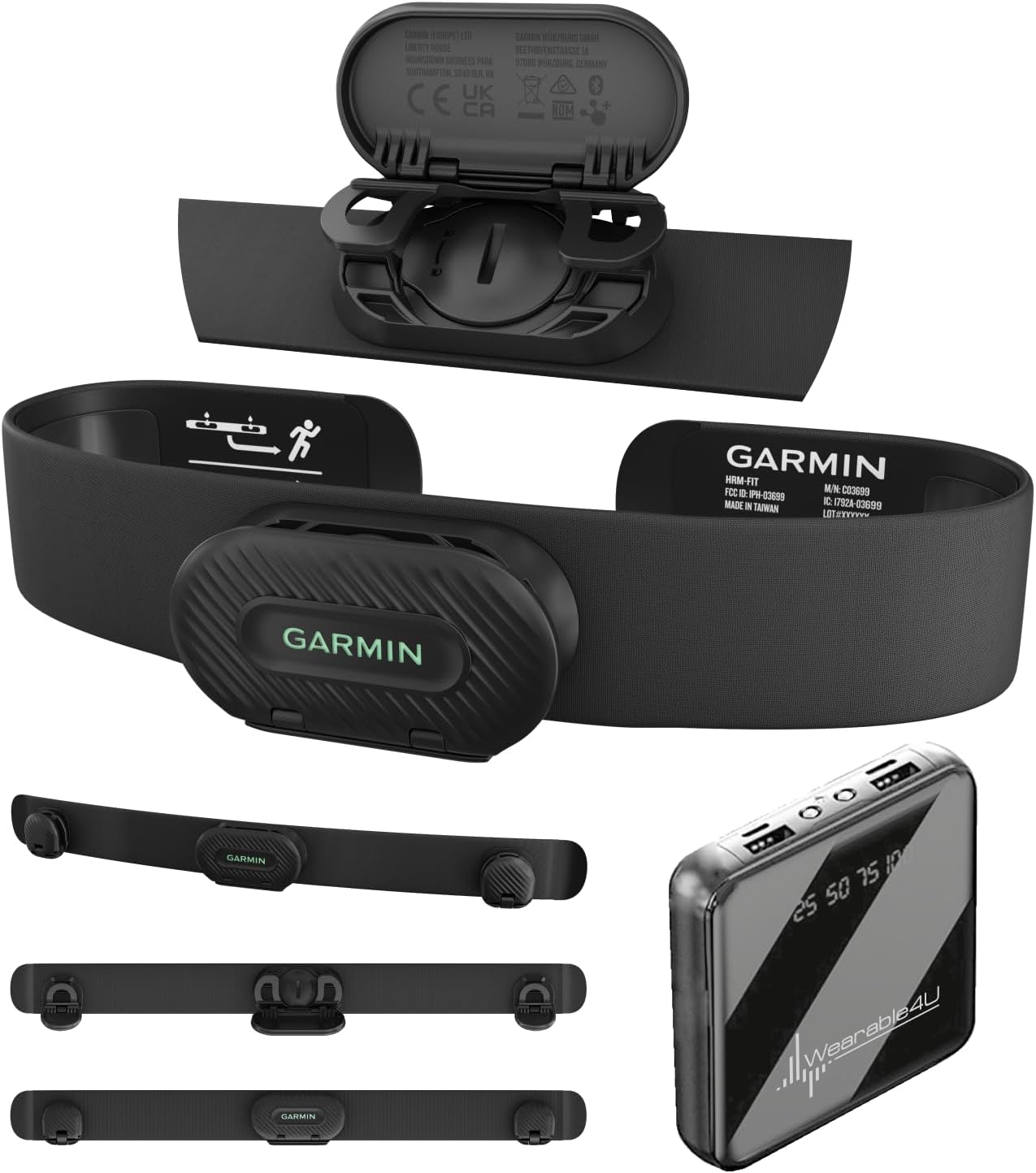
When you first unbox the Wearable4U Garmin HRM-Fit package, the thing that strikes you is its intention — not loud, but deliberate. The clip-on is small and thoughtfully contoured, and the included Wearable4U power bank hints that the brand expects you to be on the move, often.
The packaging and included pieces feel like the start of a relationship: practical, careful, and built for routine. You can tell the product isn’t designed as a one-size-fits-all gadget; it’s targeted, and that shows in details like the clip shape and the instructions.
Design and fit
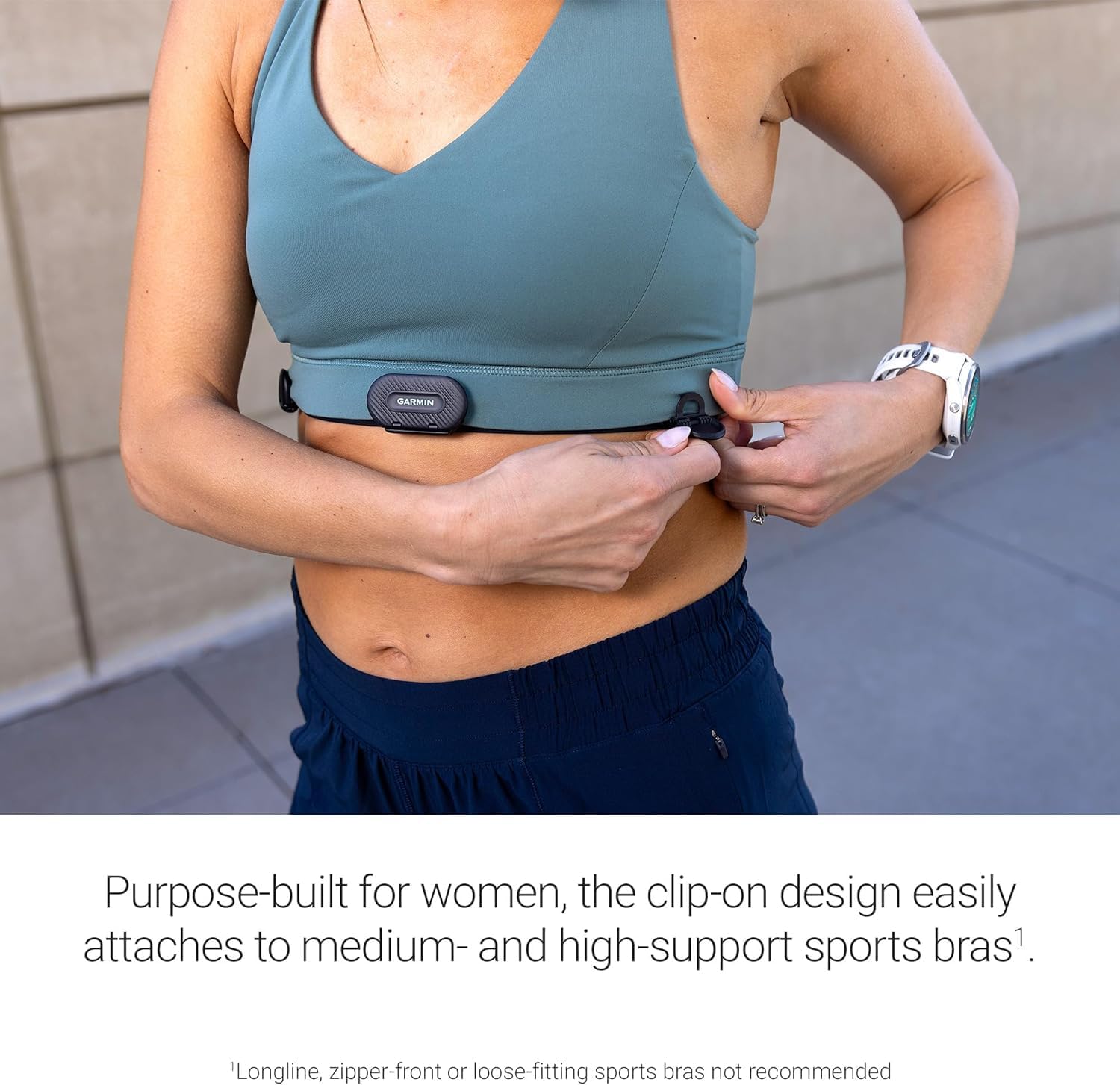
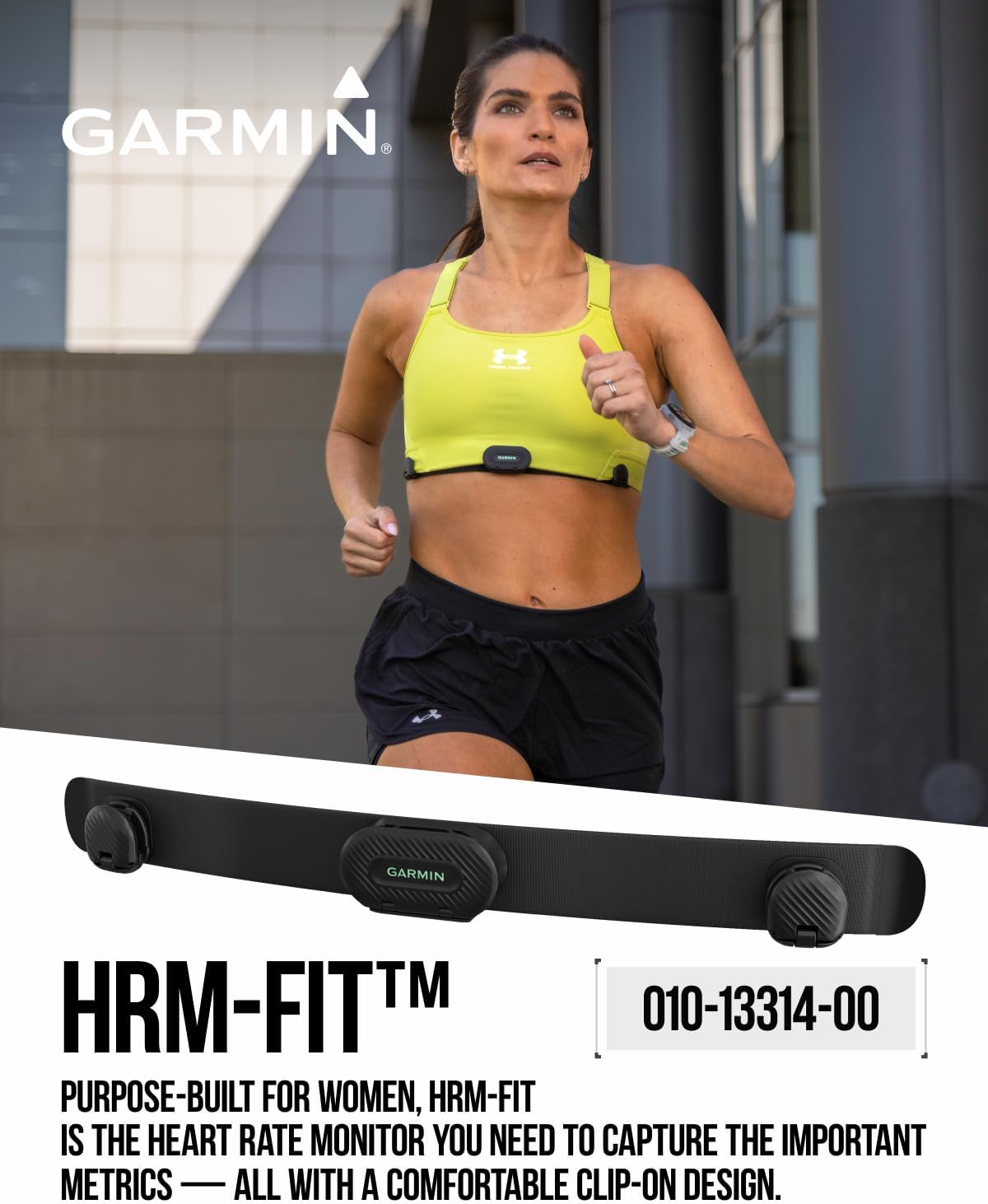
The HRM-Fit is a clip-on heart rate monitor purpose-built for women, and that informs every design choice. The clip is intended to attach to medium- and high-support sports bras — the sort you put on when you mean to run.
Its compact build keeps the sensor out of the way of your movements, and the clip sits low-profile against fabric so it won’t pick at seams or ride up. The overall aesthetic is minimal; it’s more functional than flashy, which you’ll appreciate if you prefer gear that quietly does its job.
Clip-on for women and fit considerations
Because the clip is built specifically for medium- and high-support bras, you get a snug, stable placement that works well for high-impact activities. Longline, front-zip, and light-support bras are not recommended, and you should heed that advice to avoid shifting or inaccurate readings.
If you use a front-zip sports bra, the clip may not sit where the sensor needs to read your heart rate consistently. You’ll want to test placement during a short, brisk session to confirm fit before long workouts.
Comfort and wearability
Once clipped, the device feels unobtrusive. You’ll notice it more on the first wear as your body and mind file the new sensation, but within a few minutes it becomes background. The clip’s shape is designed to avoid pinching or fabric bunching, which matters when you’re moving through miles or circuits.
For longer sessions, you’ll appreciate that it doesn’t press into your skin or create hotspots. If you already wear bras with silicone grips or thick bands, try a quick adjustment to ensure the clip sits flat and secure.
This image is property of Amazon.com.

Accuracy and performance
In practical terms, accuracy comes down to how consistently the HRM-Fit relays your heart rate and related metrics to your compatible device. The device is meant to transmit both heart rate and heart rate variability (HRV) in real time, which can be valuable for recovery tracking and stress monitoring.
For typical runs, cycling, and fitness classes, the HRM-Fit performs well. You’ll find readings stable during steady-state cardio and generally reliable during intervals, provided the clip remains secure and the receiving device maintains a stable connection.
Heart rate accuracy in different activities
During steady runs and indoor cycling, heart rate traces track smoothly when compared to chest-strap readings or trusted wrist-based monitors. In high-intensity interval training (HIIT) and activities with abrupt motion, accuracy depends on clip stability and signal pairing; you might see brief lag or smoothing of spikes.
If you’re doing plyometrics, boxing, or activities with significant torso rotation, watch the first few sessions to confirm how the sensor responds. Small shifts in placement can change the quality of the signal during those kinds of workouts.
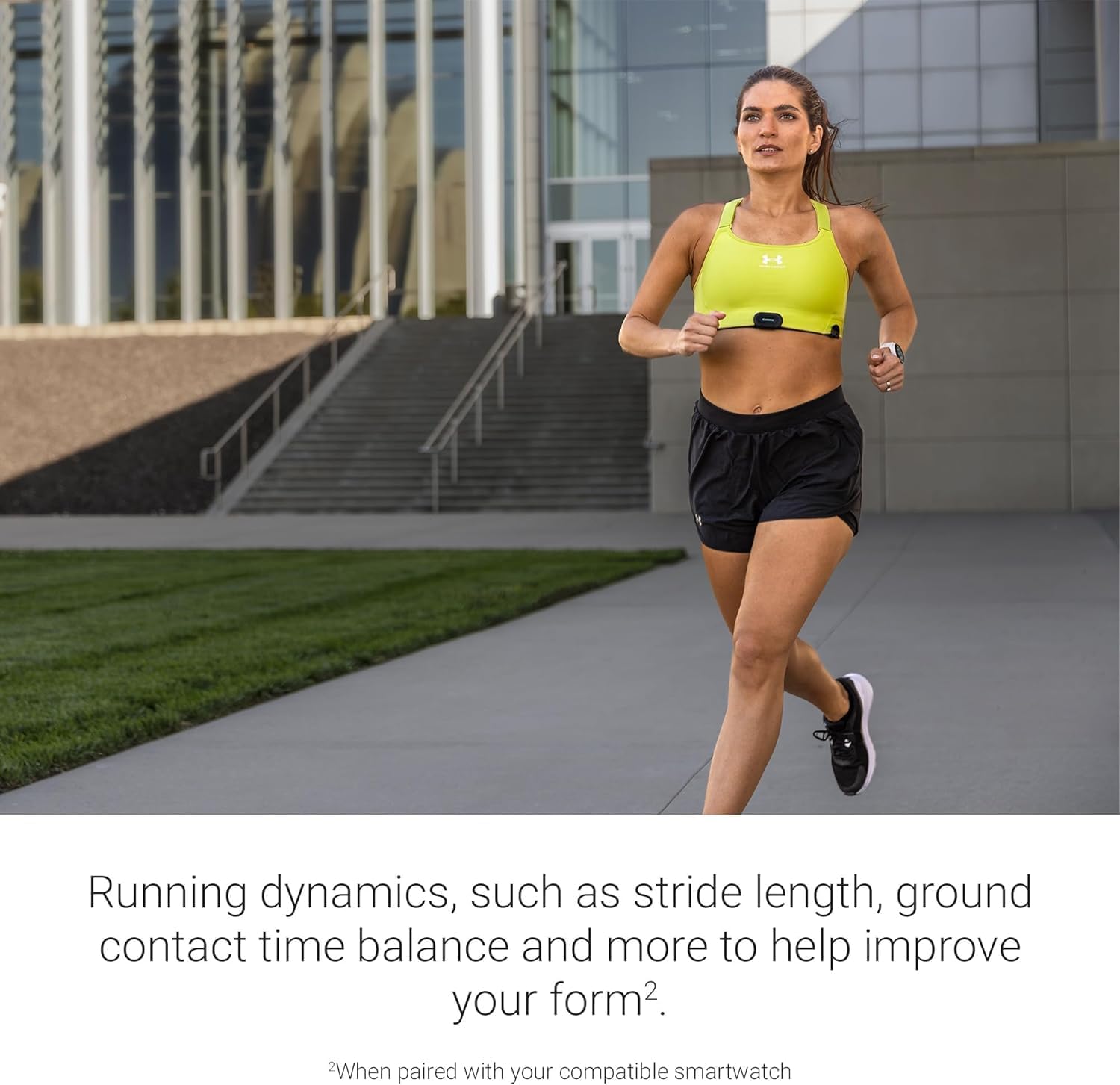
HRV and running dynamics capture
The HRM-Fit transmits HRV data, which is useful for assessing recovery and autonomic balance. If you use HRV in your training decisions, the sensor gives you live data to feed into your Garmin device or compatible app.
When paired with a compatible Garmin watch, the device can also capture running dynamics like vertical oscillation, ground contact time, stride length, and vertical ratio. Those metrics can feel abstract at first, but over weeks they reveal patterns — the quiet ways your form changes when you’re tired, or when you push harder.
Battery life and power
The claim of up to 1 year battery life is striking, and it’s one you’ll want to verify against your actual usage patterns. Because the HRM-Fit uses a low-power design and a user-replaceable coin cell battery, you can expect long service between changes.
In everyday use, with regular workouts several times a week and occasional long sessions, the battery life will comfortably last many months. The inclusion of a Wearable4U power bank in the bundle is helpful for charging your other devices, not for the HRM-Fit itself.
Wearable4U Power Bank and battery claims
The Wearable4U Power Bank included in the bundle is a practical addition that keeps your phone or watch charged during long outings. It’s compact and meant to sit in a pocket or small pouch, so you won’t notice much extra weight.
Remember that the HRM-Fit’s one-year battery estimate assumes average use and typical environmental conditions. If you train daily or use the sensor for long indoor sessions with continuous transmission, you’ll see the battery deplete faster. Keep a spare coin cell around if you want true peace of mind.
This image is property of Amazon.com.
Compatibility and connectivity
The HRM-Fit is designed to partner with Garmin devices, compatible fitness equipment, the Tacx Training app, and many smartphone apps that accept external heart rate sensors. The range of compatibility makes it versatile, whether you pair it with a high-end running watch or use it with a bike trainer.
You’ll pair it as you would other ANT+ or Bluetooth heart rate devices: enable the sensor on your receiving device, search for new accessories, and confirm the connection. Once paired, the HRM-Fit transmits continuously during workouts.
Pairing with Garmin devices and apps
If you use a Garmin watch, the pairing process is typically seamless. Garmin devices recognize the HRM-Fit as an accessory and integrate its metrics into the activity profile, so running dynamics and HRV appear alongside pace and distance.
Pay attention to software compatibility: older Garmin devices may not accept the full suite of running dynamics or HRV metrics. Before buying, check your watch model’s specifications to ensure it supports the features you care about.
Third-party app compatibility
Many third-party fitness apps accept Bluetooth or ANT+ heart rate data, so you can use HRM-Fit with apps for training, coaching, or indoor cycling. The Tacx Training app is explicitly supported, and other platforms often accept the sensor as an external strap.
If you rely on a particular app for structured training, verify its compatibility in advance. Some apps may need additional settings or firmware versions to accept the HRM-Fit as a full-featured sensor.
Data and metrics
The HRM-Fit transmits more than heartbeats. You get heart rate, HRV, and — when paired with a capable Garmin device — running dynamics. Those numbers aren’t interesting in isolation; they give you a language for what your body is doing under stress and the cues to adjust training.
You’ll find value in trends and patterns over time. Consistent HRV drops, rising resting heart rates, or subtle shifts in running economy are signals you can use to alter intensity, rest days, or technique drills.
What metrics you’ll get and what they mean
- Heart Rate (HR): Your beats per minute during activities and rest. This is the immediate measure you’ll use for pacing and intensity.
- Heart Rate Variability (HRV): The variation in time between heartbeats; lower HRV can indicate fatigue or stress, while higher HRV often suggests better recovery.
- Running Dynamics (with compatible Garmin): Vertical oscillation, ground contact time, stride length, vertical ratio, etc. These metrics help you refine running form and efficiency.
Knowing what each number suggests helps you avoid overtraining and sharpen performance. HR and HRV together tell you not just how hard you’re working, but how your nervous system is responding.
How data helps training and form
If you train with structure, you’ll use heart rate zones to guide efforts during intervals, long runs, and recovery sessions. HRV readings can guide whether you take a hard day or an easy one. Meanwhile, running dynamics reveal mechanical inefficiencies — too much vertical oscillation means you’re wasting energy bouncing up and down, while long ground contact time can indicate fatigue.
These metrics become useful only if you check them consistently and let them influence small, specific training choices. Over weeks, you’ll notice telltale correlations: a few nights of poor sleep and HRV falls; a period of strength work and ground contact time shortens.

This image is property of Amazon.com.
Setup and daily use
Setting up the HRM-Fit is straightforward if you’re accustomed to connecting sensors, but it helps to have patience the first few times. You’ll clip it to your bra, power on your receiving device, and add the HRM-Fit as an accessory. A brief test session is wise.
Daily use is simple: clip, pair, train, and forget — ideally. Routine maintenance includes ensuring the battery is fresh and ejecting the clip periodically to check cleanliness.
How to attach and position the sensor
Attach the HRM-Fit to the center band of a medium- or high-support sports bra, aligning it so the sensor faces your torso and the clip sits flat. Avoid zippers or seams that could move the device, and make sure the clip is snug but not pinching.
If your bra has a thick elastic band, position the clip where it contacts skin through the fabric for consistent readings. Try a short warmup to confirm the readout on your watch or app matches your perceived effort.
Charging, maintenance, and care
The HRM-Fit uses a coin cell battery; changing it is simple but requires a small screwdriver or coin to open the battery compartment. Keep spare batteries handy if you train frequently.
After sweaty sessions, rinse the clip with fresh water and allow it to air dry. Avoid submerging for long periods and keep it away from harsh detergents. The clip’s contacts should be clean to ensure stable transmission.
Practical usage scenarios
Different training scenarios reveal the strengths and small limitations of the HRM-Fit. For steady runs and indoor cycling, you’ll enjoy consistent readings. For HIIT and classes, you’ll depend on secure placement and pairing stability.
For commuters and mixed-activity days, the device is easy to attach and remove, which makes switching between activities straightforward. The small size and discreet clip mean you can run errands or meet a friend post-workout without a bulky strap.
Running
Running benefits most from consistent heart rate and running dynamic metrics. If you’re focused on form, the HRM-Fit gives you numbers to quantify changes after speed work or strength sessions.
When you train for a race, you’ll depend on its accuracy during tempo runs, intervals, and recovery jogs. Use HR zones for pacing and check running dynamics after hill repeats to see how your form holds up.
Cycling
For indoor and outdoor cycling, the HRM-Fit transmits steady heart rate data that pairs well with bike computers and trainer apps. On the trainer, you’ll get reliable HR readings for structured workouts; outdoors, be mindful of movement and sweat affecting clip stability.
Because cyclists often wear jerseys and fit differently, you’ll want to test placement to ensure the clip won’t shift during sprints or out-of-the-saddle efforts.
Strength training and classes
In strength sessions, the HRM-Fit gives a clearer picture of cardiovascular strain than wrist-based monitors. For circuit classes and HIIT, it can capture your spikes and recovery between rounds — provided the clip remains snug.
For activities with a lot of upper-body twisting or contact, take care that the clip doesn’t snag. In group fitness settings, quick checks mid-class help ensure you’re getting clean data.
This image is property of Amazon.com.
Pros and cons
You’ll find clear benefits to using the HRM-Fit, but there are trade-offs too. Being honest about both helps you choose with confidence.
Pros:
- Designed for women’s sports bras, improving comfort and placement.
- Transmits real-time HR and HRV, with advanced running dynamics when paired with compatible Garmin devices.
- Long battery life with a replaceable coin cell.
- Comfortable and unobtrusive during long sessions.
- Included Wearable4U power bank is a useful accessory.
Cons:
- Not suitable for longline, front-zip, or light-support sports bras.
- Running dynamics require a compatible Garmin device; not all watches will capture the full suite.
- Accuracy can be affected by unstable clip placement during very dynamic movements.
- The clip design limits universal fit across all bra types.
Comparison with alternatives
Choosing an HR monitor is often a matter of trade-offs: comfort vs. dead-on accuracy, convenience vs. compatibility, and aesthetics vs. function. The HRM-Fit sits in a comfortable middle ground designed for women who want accuracy and comfort without a chest strap.
Chest straps vs clip-on optical monitors
Chest straps (traditional ECG straps) often provide the most reliable heart rate data, especially during rapid changes in intensity. If you need to capture every beat with minimal lag, a chest strap remains the gold standard.
The HRM-Fit aims to match chest-strap reliability while improving comfort and wearability. If you’re a runner who dislikes straps and wants HRV and running dynamics without a band, this clip-on offers a convincing compromise.
Other Garmin HRMs
Garmin’s HRM-Pro and HRM-Run offer advanced metrics and multisport features, but they’re chest straps. The HRM-Fit provides similar running dynamics to other Garmin products when paired with compatible devices but with a design tailored for bras.
If you already use Garmin’s ecosystem and you’d rather skip a chest strap, the HRM-Fit is a natural pick — assuming your watch supports its full feature set.
This image is property of Amazon.com.
Troubleshooting common issues
Most problems you’ll encounter are minor and fixable: shaky connections, weird readings, or placement woes. A few quick checks usually get things back to normal.
Connection drops
If the connection to your device drops during a workout, first check the battery level and ensure the coin cell is seated properly. Also, look at the receiving device’s Bluetooth/ANT+ settings and re-pair the sensor.
Keep your phone or watch firmware current, and minimize the number of devices trying to pair simultaneously to avoid interference.
Data inaccuracies
If heart rate readouts look laggy or inconsistent, confirm the clip sits flush against the fabric and the fabric lies flat. Replace a weak battery and test again. For persistent inaccuracies, try another compatible device to isolate whether the sensor or the receiver is the issue.
If nothing helps, contact Wearable4U or Garmin support; firmware updates or a replacement may be necessary.
Who should buy this
You should consider the HRM-Fit if you:
- Prefer not to wear a chest strap and want more comfort during long runs and workouts.
- Use medium- or high-support sports bras and want data that’s tailored to female athletes.
- Are invested in Garmin’s ecosystem or use apps that accept external HR sensors.
- Value HRV and running dynamics for training and recovery insights.
You might skip this product if you:
- Regularly wear front-zip or light-support bras.
- Need the absolute highest fidelity heart-rate tracking during very high-motion activities.
- Use a non-compatible device that won’t take advantage of running dynamics.
Unboxing and what’s included
What’s in the box matters because it sets your expectations and gets you training sooner. In this bundle you’ll find:
- 1x Garmin HRM-Fit – Women Heart Rate Real-Time Monitor
- 1x Wearable4U Power Bank
- Documentation and user guide
The heart rate monitor itself is small and lightweight, and the power bank is a welcome bonus for long days when you need to keep devices charged. You’ll want to read the quick start guide for pairing tips and placement recommendations.
Final verdict
If you want a heart rate monitor that respects your body shape and gives you meaningful, trainable metrics without the discomfort of a chest strap, the Wearable4U Garmin HRM-Fit is a thoughtful choice. It balances accuracy, comfort, and battery life in a package designed for your routine, whether that’s steady runs, spirited indoor rides, or daily classes.
You’ll get the most from this device when you pair it with a compatible Garmin watch and treat the metrics as information to inform small, steady training adjustments. It won’t be flawless in every circumstance, but it will reward you with consistent, actionable data if you use it as part of a considered training plan.
Frequently asked questions (FAQs)
You probably have practical questions about daily life with the HRM-Fit. Below are answers that address common concerns.
-
How long does the battery last in real-world use?
You can expect many months of use with moderate weekly training; actual time depends on transmission frequency and environmental factors. -
Can you swim with the HRM-Fit?
The HRM-Fit is designed mostly for land-based activities; check the official waterproof rating before prolonged water exposure. Even if water-resistant, clip placement and fabric can influence readings in the pool. -
Will it work with non-Garmin devices?
Yes, the HRM-Fit transmits standard heart rate data to many third-party apps and devices that accept Bluetooth or ANT+ sensors. Verify compatibility with your specific device or app for advanced metrics. -
Is it compatible with all sports bras?
It’s best with medium- and high-support sports bras. Avoid longline, front-zip, or light-support bras for reliable placement. -
How do running dynamics work with this sensor?
When paired with a compatible Garmin watch, the HRM-Fit transmits motion data used to calculate running dynamics like vertical oscillation and ground contact time. These metrics require a watch that supports running dynamics. -
What should I do if my readings seem off?
Check placement, battery, and pairing. Clean the clip and retest. Try pairing with another compatible device to isolate the problem. -
Is a chest strap more accurate?
Chest straps often produce the most accurate instant heart rate readings, especially with sudden intensity changes. The HRM-Fit narrows that gap while offering greater comfort.
If you want help with a specific setup — like pairing with a particular Garmin watch or using it with a trainer app — tell me the model of your device and I’ll walk you through the steps.
Technical specifications (at-a-glance)
Below is a concise table summarizing the main specs to help you compare quickly.
| Specification | Details |
|---|---|
| Product Name | Wearable4U Garmin HRM-Fit – Women Heart Rate Real-Time Monitor (010-13314-00) + Gift Bundle |
| Included Items | 1x HRM-Fit clip-on sensor, 1x Wearable4U Power Bank, documentation |
| Designed For | Women; medium- and high-support sports bras |
| Heart Rate Transmission | Real-time HR and HRV via ANT+/Bluetooth |
| Running Dynamics | Vertical oscillation, ground contact time, stride length, vertical ratio (requires compatible Garmin device) |
| Battery | Replaceable coin cell; up to 1 year (typical usage varies) |
| Activities | Running, cycling (indoor/outdoor), strength training, HIIT, fitness classes |
| Compatibility | Garmin devices, Tacx Training app, many third-party smartphone apps and fitness equipment |
| Comfort | Low-profile clip designed to avoid fabric bunching or pinching |
| Not Recommended For | Longline, front-zip, or light-support sports bras |
If you want a direct comparison to a specific model or are choosing between this clip-on and a chest strap, tell me which other product you’re considering and I’ll outline the differences side-by-side.
You’ve got a product that’s honest about what it can do and why it’s different: the Wearable4U Garmin HRM-Fit is a carefully thought-out solution if comfort and meaningful metrics are your priorities. Use it with intention, check placement after the first few sessions, and let the subtle language of HR and running dynamics guide your training choices.

Disclosure: As an Amazon Associate, I earn from qualifying purchases.
Discover more from Fitness For Life Company
Subscribe to get the latest posts sent to your email.