

?Have you ever found yourself watching the sky the way you watch a photo album, searching for patterns and small, telling changes that mean something larger?

This image is property of Amazon.com.

First Impressions
When you first unwrap the SUUNTO Core Sports Watch, Classic Outdoor Adventure Watch with Altimeter, Barometer & Compass, Dual-time Sunrise & Sunset Display, Temperature & Storm Alarm for Hiking, Mountain Use you notice its quiet confidence. It doesn’t shout; it sits on your wrist like something that has been waiting to be useful.
You’ll notice a deliberate weight to it, not heavy but substantial enough that the watch feels like an instrument rather than an ornament. The first moments with it are about adjusting, reading, and letting that small analog of time fit into the rest of your daily rhythm.
Design and Build Quality
The design is spare and purposeful, and in its restraint there is a kind of comfort. It feels unpretentious; you can imagine children in camping jackets borrowing it for a weekend and a careful parent handing it over without worry.
Aesthetic
The face is matte, the edges defined, and the glass sits flush without flashy embellishments. You’ll appreciate the way the sensors are integrated into the case—functional, and without unnecessary decoration.
Durability and Materials
The case is constructed to withstand knocks and weather, made from composite materials that resist salt and scuffing. If you wear it through rain, wind, and the occasional stumble on a trail, it will remind you of each encounter only in the softened finish rather than in catastrophic failure.

Display and Interface
The display reads like a small, well-organized map of information; everything is where it should be. You’ll find that it balances a lot of functions without overwhelming you with buttons and menus.
Readability
Numbers and icons are presented with clear typography; the contrast helps on overcast days when light is scarce. You’ll rarely need to squint, even under a tree canopy, and the backlight will save you on pre-dawn starts.
Buttons and Navigation
Buttons are tactile and require deliberate presses, which you’ll appreciate when you want to avoid accidental mode changes. The layout favors logic—press, hold, scroll—and once you have the sequence committed to memory, you won’t think about it again.
Core Features
This watch is built around the fact that you want reliable environmental data on your wrist, without having to stop and fish for it. Each feature has a purpose grounded in movement, weather, and time.
Altimeter
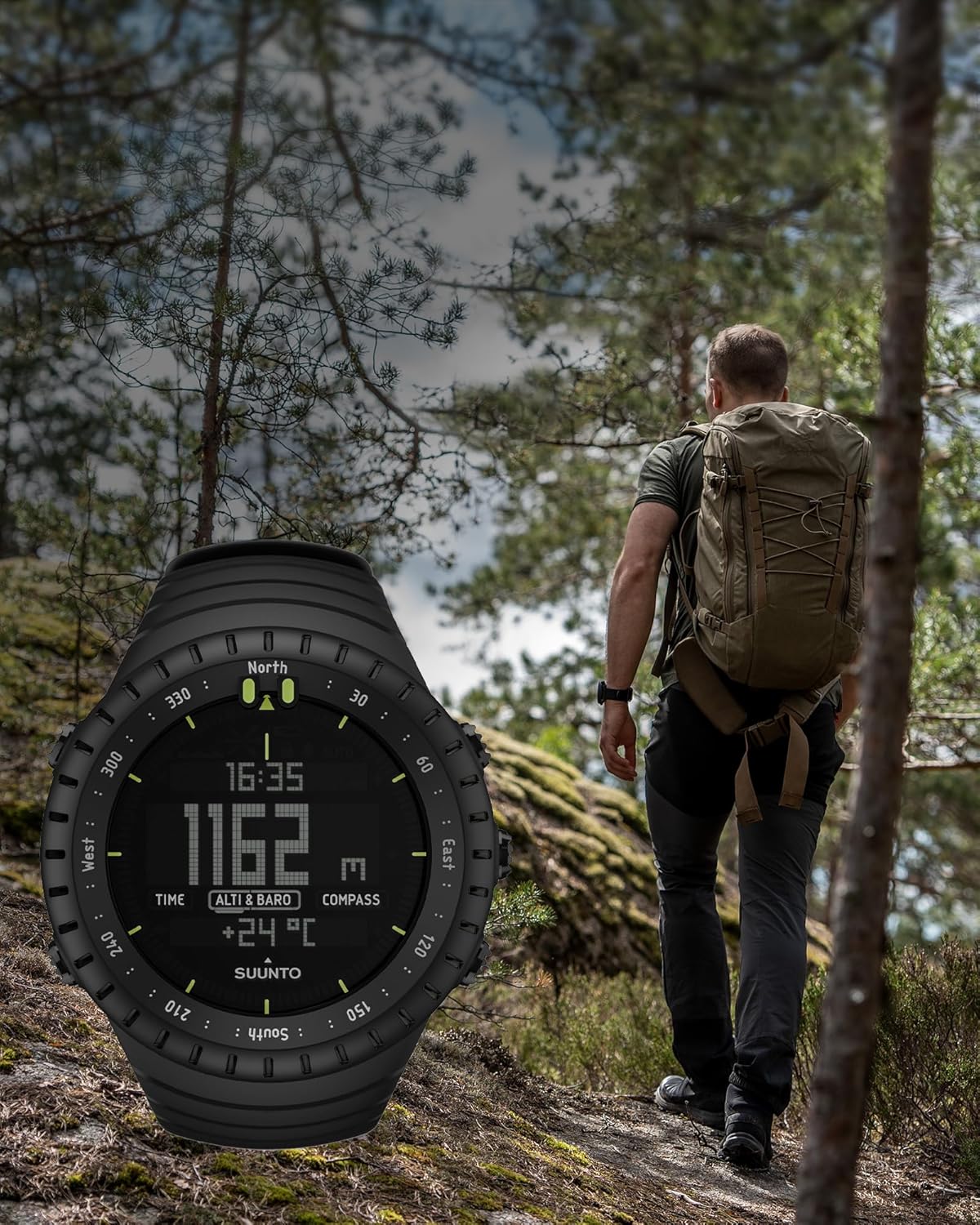
The altimeter gives you elevation data that you can use to track ascent and descent, log vertical gain, or simply check how the landscape is changing beneath your feet. It’s particularly valuable if your plans include ridge lines, passes, or long climbs where elevation informs decisions.
Barometer
The barometer reads atmospheric pressure and can predict pressure trends that indicate weather changes. When the pressure drops rapidly, the watch will tell you what your instincts may have suspected: that a storm is approaching.
Compass
The compass is uncomplicated and reliable when you need a sense of direction beyond the trail markers. You can use it in combination with the watch’s other sensors to orient yourself when landmarks blur into one another.
Dual-time and Sunrise/Sunset Display
You get a dual-time display for keeping track of home time while you’re away, and the sunrise/sunset function that gives you an immediate sense of the day’s span. Those two small conveniences matter more than you’ll expect when planning summits or deciding when to push on and when to stop.
Temperature & Storm Alarm
Temperature readings offer ambient awareness, while the storm alarm gives a real-time nudge when barometric trends suggest worsening weather. Together they form a quiet advisory system that you can trust not to interrupt your focus unless necessary.
This image is property of Amazon.com.
Technical Specifications (Quick Reference)
The details can get noisy if you let them; this table keeps the essentials clear so you can read them at a glance. You’ll find that the numbers map directly to practical decisions on the trail.
| Feature | What it means for you |
|---|---|
| Altimeter | Track your elevation and vertical speed during climbs and descents |
| Barometer | Monitor pressure trends to anticipate weather changes |
| Compass | Obtain reliable heading information when navigating without GPS |
| Sunrise/Sunset | Know daylight hours for planning starts and stops |
| Dual-time | Keep home time or alternate time zone visible while traveling |
| Temperature | See ambient temperature; useful for layering decisions |
| Storm Alarm | Audible/visual alert if the barometric pressure indicates a storm |
| Battery | Replaceable coin cell; expect several months depending on use |
| Water Resistance | Suitable for rain and splashes; not for deep diving |
| Weight | Comfortable for daily wear without fatigue |
Performance in the Field
On a long ridge walk, the watch becomes a companion, quietly offering incremental data that alters your small decisions. It’s not dramatic technology, but the kind that steers the hum of your day in subtle, important ways.
Hiking and Mountain Use
When you’re planning an early start for a summit, the sunrise/sunset and dual-time functions give you a better sense of when you’ll be returning to shelter. The altimeter helps you judge when to conserve energy and when you’re close enough to push for a viewpoint.
Everyday Wear
You’ll find the watch at home in daily life, too. It reads as a utilitarian accessory in the city: reliable, readable, and unobtrusive. There is comfort in a single device that can go from office to trail without feeling out of place.
Battery Life
Battery life depends on how often you use backlight and alarms, but the coin cell battery is replaceable by you or a technician. You’ll get months of service with typical use, and the peace of mind that comes with a simple, replaceable power source.

This image is property of Amazon.com.
Accuracy and Reliability
Accuracy is not only a metric but an experience—how often the altimeter matches the known contour of a map, how consistently the barometer shows pressure trends you can trust. You’ll find that routine calibrations keep the readings true, and the watch’s stability means it doesn’t betray you when the weather does.
You’ll occasionally notice small discrepancies, as you might between a friend’s memory and your own, and calibration is the way to align devices and perception. If you set it against a known elevation point or calibrate the pressure at sea level, it will give you more confidence as the day unfolds.
Setup and Calibration
Initial setup is straightforward, but it pays to take a few quiet minutes with the manuals and the settings before you head into unfamiliar terrain. You’ll save time and frustration by calibrating the altimeter and barometer against known references.
When you start, find a known elevation point or check local barometer readings, and set the watch accordingly. You’ll want to revisit calibration if you travel quickly across large altitude changes or storm systems.
This image is property of Amazon.com.
Usability Tips
This watch rewards the patient and the intentional. You don’t need to learn every menu to be safe, but the more you use the instrument, the more it feels like a second sense.
- Keep calibration points in mind and verify altitude when you can.
- Test the compass on a flat surface away from metal or magnets.
- Use the storm alarm as a prompt to check the sky, not as a sole decision-maker.
Water Resistance and Field Care
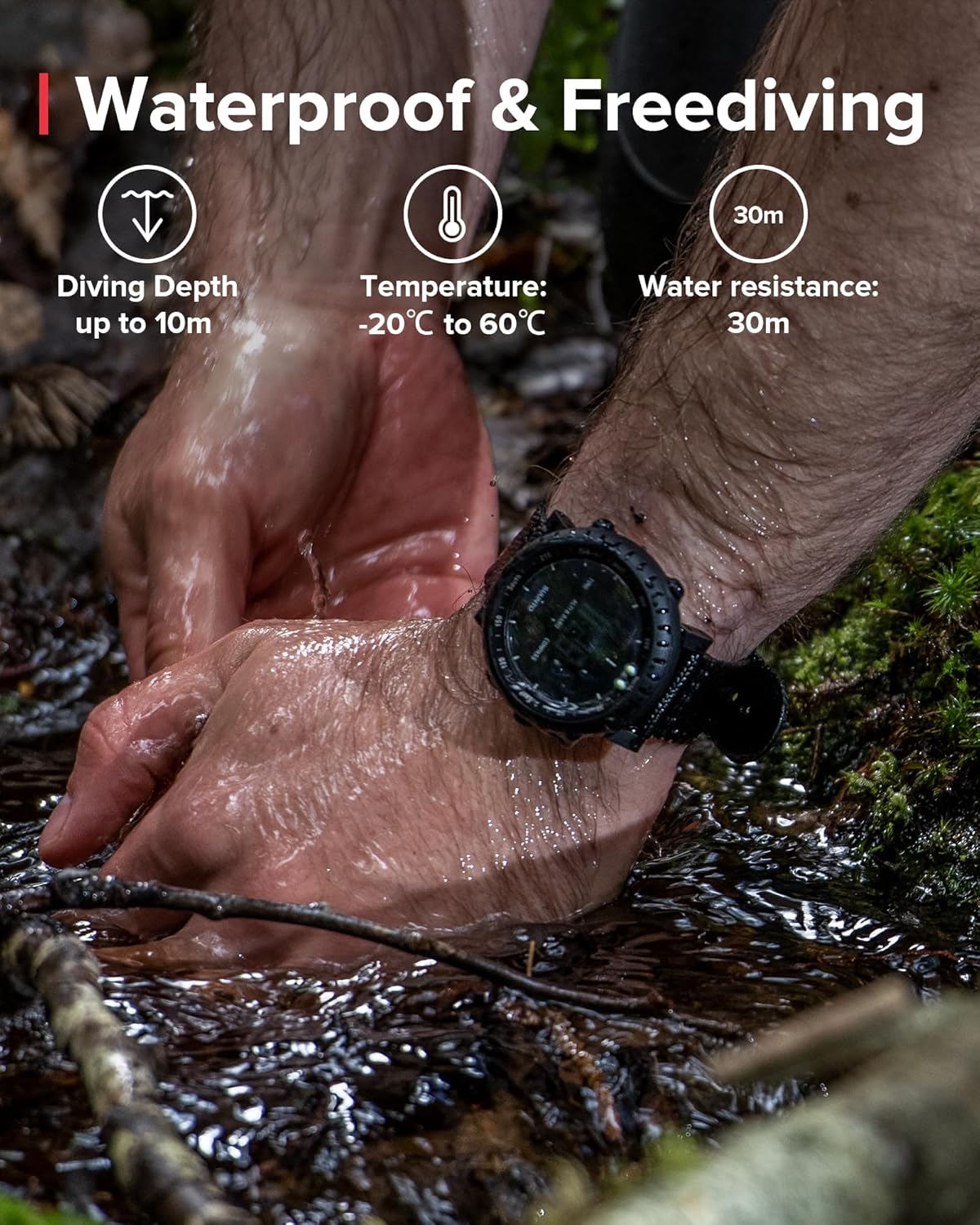
The watch is designed to resist rain and splashes, and it tolerates the abrasions of outdoor travel with grace. You’ll want to avoid deep-sea immersion and prolonged exposure to saltwater without rinsing.
If you spend time near the ocean, rinse the watch with fresh water after exposure to salt spray or immersion to prevent corrosion. Clean the strap and case regularly to keep grime from building in the crevices where moisture can linger.
This image is property of Amazon.com.
Comfort and Fit
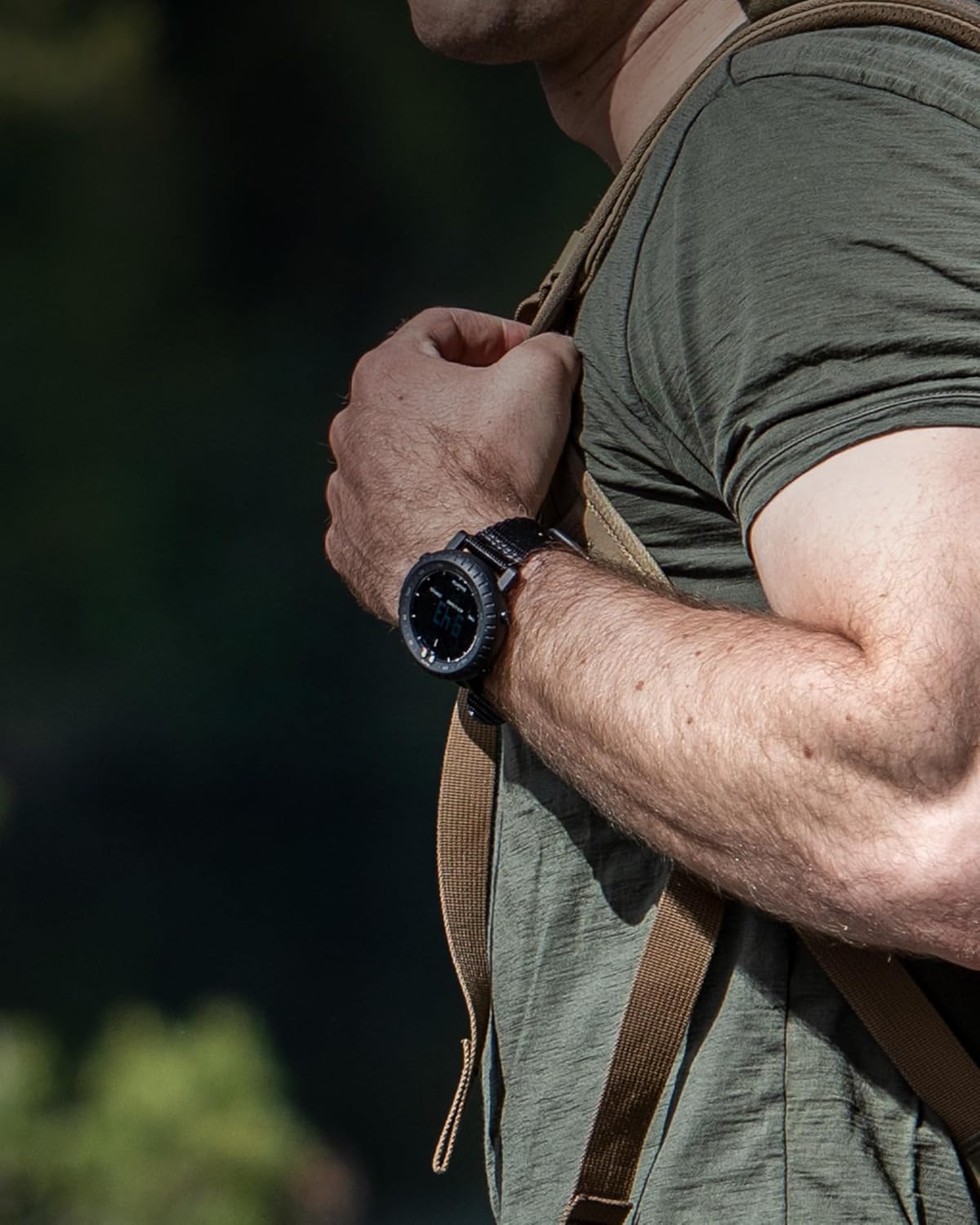
The strap is flexible and comfortable, and the watch sits in a way that won’t create hotspots during long wear. You’ll notice the difference between a watch that fights you and one that becomes forgettable within an hour; this one tends to the later.
Adjust the strap to avoid tightness that can distort temperature readings and to keep the watch sensor area unobstructed. If you’re wearing gloves, practice pressing the buttons so your movements stay smooth.
Comparison with Similar Models
If you’re used to modern GPS watches with rich full-color screens, this SUUNTO Core Sports Watch will feel like a different philosophy—less about constant tracking and more about environmental awareness. You’ll trade route mapping for sensor precision and battery simplicity.
Compared to high-end GPS devices, you’ll gain simplicity and longevity, and lose continuous mapping and mobile connectivity. The Core’s strengths are its robust sensors and longevity rather than an app-driven, cloud-dependent ecosystem.
This image is property of Amazon.com.
Accessories and Upgrades
There are third-party straps and protective covers that can add a bit of personalization or extra protection. You’ll find more straps than you might expect, from textile to rubber to leather, and choosing one can subtly change the watch’s character.
If you want a different look, swap the strap. If you want to protect the bezel on heavy jobs, consider a cover. Accessories are small, but they let you shape the watch to your life.
Who This Watch Is For
This model is for people who move through the world with attention to physical place—hikers, climbers, and those who spend time in variable weather. If you want something that tells you what the environment is doing without talking to your phone every minute, this fits.
It’s also for those who appreciate tools that are legible and durable: teachers of outdoor skills, weekend backpackers, and commuters who like straightforward reliability. If you need hiking basics and trustworthy sensors without a distraction-heavy interface, you’ll find it satisfying.

This image is property of Amazon.com.
Limitations to Consider
No device is perfect, and this watch has clear limitations that you should consider before buying. The SUUNTO Core Sports Watch does not have GPS navigation or mapping, which means you’ll need maps and route-planning skills for complex trips.
If you prefer live route tracking, turn-by-turn navigation, or syncing every metric to an app in real time, you’ll feel frustrated. It also has limited water resistance for serious aquatic activities, and the display lacks the high definition of modern smartwatches.
Real-World Scenarios
Imagine a morning when you set out before dawn, coffee cooling in a bottle, shoes still stiff. The sunrise/sunset function tells you that daylight is coming in an hour, the barometer begins to dip, and you adjust your plan by choosing a ridge within reach of shelter.
Or picture a family on a weekend hike; one child trips and the group pauses. You glance at the altimeter to get a sense of how much you’ve ascended, use the compass to confirm direction, and continue. Small pieces of information shift the tone of the day from uncertain to manageable.
Maintenance and Longevity
A device like this rewards the kind of care you give to durable things: occasional cleaning, battery checks, and gentle handling. You’ll want to change the battery when needed and keep the case free of grit to prolong the seals.
Replace the coin cell battery on schedule, test functions periodically, and store the watch in a dry place when not in use. If you treat it as an instrument rather than trinketry, it will remain reliable for years.
The Question of Value
Value is not only the price you pay but the quiet reductions in worry it gives you on a trail. You’ll weigh the initial cost against the seasons of use and the sense of security it offers when weather changes suddenly or a route unexpectedly lengthens.
If you value simplicity, ruggedness, and sensors that tell you about the landscape rather than your social feed, the return on investment is high. For some, the trade-off with GPS and app features will tilt the balance otherwise; think about what you actually use on extended trips.
Practical Buying Tips
Buy from a reputable retailer with a fair return policy so you can test the watch’s fit and function in your life. You’ll want to confirm the warranty and note whether the strap or bezel might need replacement parts available locally.
Check for package contents and make sure the watch model and shade meet your expectations. If you can, wear it for a day to check comfort and button accessibility before committing.
Packaging and Included Extras
The packaging is functional and minimal, presenting the watch like a small, serious object. You’ll find the manual, warranty information, and sometimes a small tool or spare strap depending on the retailer.
Read the manual for calibration instructions and alarm settings; the initial time spent understanding it repays itself on the trail. The watch feels more like a tool when you know how to set it up for your specific needs.
Environmental and Ethical Considerations
If you’re thinking beyond immediate function, consider that a product designed for longevity is often a smaller footprint than disposable electronics. You’ll likely use this watch for years, which reduces the churn of cheap devices.
Repairability matters too: the replaceable battery and modular strap mean you’re not forced into early replacement. Consider purchasing from sellers who offer repair options to extend the watch’s life further.
FAQs
You’ll have practical questions, and simple answers can make planning easier. Below are the most common concerns and clear, brief responses.
- Is the watch waterproof? It’s water-resistant for rain and splashes but not suited for deep diving. If you’ll be in water often, consider a more specialized dive watch.
- How often should you calibrate the altimeter? Calibrate when you can at a known elevation or after substantial altitude changes. Regular checks keep readings accurate.
- Can you change the battery yourself? Yes, the coin cell battery is user-replaceable, or you can have a watch technician do it for you.
- Does it sync with a smartphone? This model is not a smartwatch and does not sync continuously with phones; it’s designed to be a standalone instrument.
Final Verdict
If you want a watch that feels like an honest companion in changing conditions, the SUUNTO Core Sports Watch, Classic Outdoor Adventure Watch with Altimeter, Barometer & Compass, Dual-time Sunrise & Sunset Display, Temperature & Storm Alarm for Hiking, Mountain Use gives you that. You get clear data, strong construction, and a quiet usability that supports decisions rather than distracting from them.
You’ll find that what this watch offers is a kind of calm: the small certainties of an altimeter that tells you where you’ve climbed, a barometer that warns you of pressure changes, and a compass that gives you a reliable heading. For trips where your judgment and knowledge are the main tools, this watch is an honest and durable addition.
Product Details
Do you like this outfit?YesNoThank you for your response!
This odd line appears as part of the product details packaging sometimes, a quirk of presentation in a world that mixes commerce and personality. You’ll laugh at it or ignore it, but it’s a small reminder that the things we buy often come with odd human traces.
Closing Note
When you wear this watch, you’re choosing a tool that values clarity over complexity and reliability over novelty. You’ll learn its rhythms and, in time, you’ll feel the way it integrates into your decision-making on the trail and in everyday life.
If your life asks for practical information about the world in which you move—and you prefer not to tether every measurement to a phone—this watch will answer quietly and well.

Disclosure: As an Amazon Associate, I earn from qualifying purchases.
Discover more from Fitness For Life Company
Subscribe to get the latest posts sent to your email.