

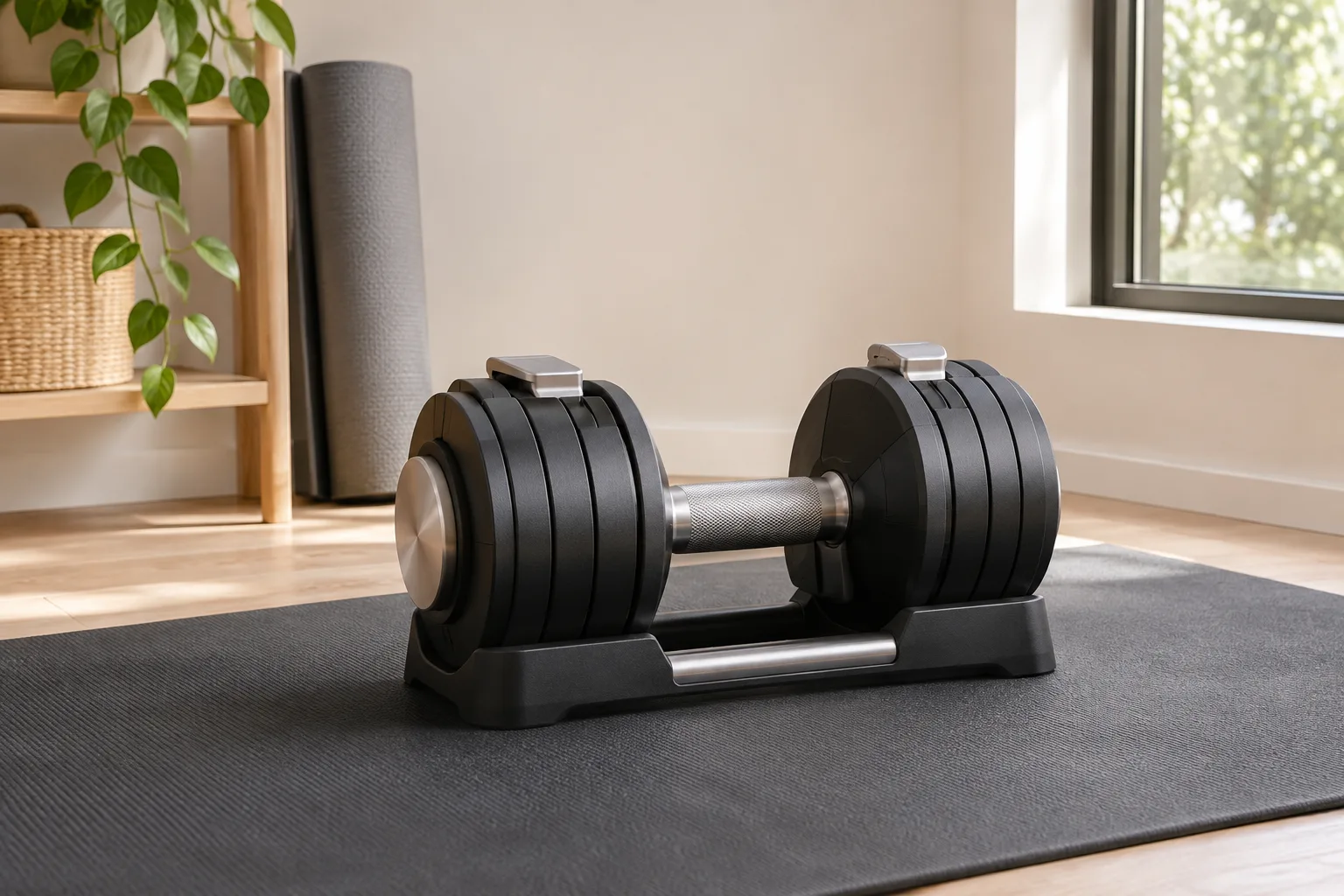
The real cost of a home gym starts with your goals
What’s the real cost of building a home gym? Uncover the 6 Numbers You Must Consider Before You Buy: the answer depends on your training goals, equipment choices, available space, and costs beyond the purchase price. A useful home gym can begin with a few basic tools—or bodyweight exercise—and grow as your routine takes shape. A dedicated fitness room with several large machines and premium equipment is a different project.
Before we spend, we should ask a more practical question: what kind of movement will fit the life we have? A parent squeezing in strength work before the household wakes, a beginner learning basic movements, and an experienced lifter training with a barbell have different needs. The best setup supports a realistic training schedule and household routines, not only an ambitious plan made on a burst of motivation.
We’ll calculate six numbers: equipment, delivery, flooring, installation and safety setup, space preparation, and ongoing ownership costs. This estimate is more useful than looking at a product’s sticker price alone.
What’s the real cost of building a home gym? Uncover the 6 Numbers You Must Consider Before You Buy, then consider whether the equipment will still serve your goals months from now. What’s the real cost of building a home gym? Uncover the 6 Numbers You Must Consider Before You Buy: start with the routine you can sustain, and let that guide the spending.

Number 1: Set an equipment budget for the training you’ll actually do
Your equipment budget is the planned cost of the tools needed for your routine; it is only one part of the total startup cost. A mat and adjustable basics create a different commitment from a strength setup with a rack or a shared room containing cardio and strength equipment.
Equipment quality tiers help frame choices without assuming every buyer needs the same thing. Entry-level equipment can suit beginners and lighter use; mid-range choices may offer different construction or features; commercial-grade equipment is designed for demanding use, while premium equipment may include additional features or finishes. Compare the specifications, warranty, fit, and intended use rather than relying on the label.
For strength training, free weights are versatile but require storage and careful handling. Dumbbells support many exercises; a barbell allows loaded lifts, while a weight bench expands pressing and supported movements. A power rack can provide a place to perform barbell lifts with safeties, but it needs room and appropriate setup. Weight machines guide particular movement paths and can suit users who want a more fixed setup, though larger models take more space.
Consider three profiles: a beginner might start with bodyweight movements, a mat, and adjustable basics; a strength trainee might add a barbell, bench, and rack; a household might combine strength tools with cardio equipment chosen for the family’s actual routines. How much money is needed to build a gym? A useful starter can be modest; a full gym depends on goals and equipment choices.
What’s the real cost of building a home gym? Uncover the 6 Numbers You Must Consider Before You Buy by listing only the equipment required for workouts you intend to do. What’s the real cost of building a home gym? Uncover the 6 Numbers You Must Consider Before You Buy, and leave room in the plan for later equipment upgrades rather than buying every possible tool now.
Number 2: Include delivery, assembly, and installation
The advertised price is not necessarily the amount required to get equipment safely into use. Add delivery, assembly, installation, and any required accessories or hardware to the startup cost. If an item needs a compatible mat, mounting hardware, or other parts to function as intended, include those costs before deciding it fits your limit.
Transport and setup can be especially involved for a weight machine or power rack. A large item may arrive in multiple packages, need several people to move, or require assembly in the room where it will stay. Smaller home gym equipment is often easier to carry and store, but we should still check whether it needs assembly or has parts that must be purchased separately.
Before ordering, work through this checklist:
- Delivery terms: Find out whether delivery is to the door, inside the home, or to the room where the equipment will be used.
- Access: Measure doorways, stairs, turns, and the intended route. A rack that fits the room may not fit through the entry.
- Assembly: Confirm what the seller provides and what tools or help are needed.
- Warranty and returns: Read conditions that may depend on assembly, installation, or the equipment’s condition when returned.
Write these charges beside the equipment price, not in a later column labeled “surprises.” That small change makes comparisons fair: one seller’s lower listed price may not mean a lower cost to get the item installed.
What’s the real cost of building a home gym? Uncover the 6 Numbers You Must Consider Before You Buy by asking for the full delivery and setup terms before checkout. What’s the real cost of building a home gym? Uncover the 6 Numbers You Must Consider Before You Buy, including the costs of getting each large item through the door and ready to use.

Number 3: Calculate flooring and prepare the room
Cost per square foot is a way to estimate flooring or room-preparation expense across the area you plan to cover. To use it, measure the area, decide whether the whole room or only a workout zone needs covering, and compare material and installation choices. The final cost depends on both the amount of floor and the material and work involved.
Choose flooring for the equipment and training, not just its appearance. Free weights can be dropped, so consider protection for the floor and equipment, as well as noise traveling to other rooms or neighbors. A weight machine creates different demands from a mat-based workout. Check the flooring’s stated load capacity and whether the surface is suitable for the equipment; don’t assume a soft covering alone makes a floor appropriate for heavy loads.
Square footage does not tell the whole story. Measure ceiling height, equipment footprint, and the space needed to move around each item. Check ventilation and safe access, too. In a 10-by-10-foot room, a compact setup may work, but fit depends on the equipment dimensions, movements, storage, and clearance. A bench and adjustable dumbbells take a different layout from a rack, barbell, and cardio machine.
There is no universal square-foot minimum for every gym. A minimal workout area may need only enough floor for the movements and tools selected; a room for several large pieces needs more area, usable clearance, and storage. Sketch the room and mark equipment footprints before ordering.
What’s the real cost of building a home gym? Uncover the 6 Numbers You Must Consider Before You Buy, including flooring and room preparation—not just the equipment footprint. What’s the real cost of building a home gym? Uncover the 6 Numbers You Must Consider Before You Buy by checking that the room works for real movement as well as the equipment you plan to place in it.
Number 4: Budget for safety and the right setup
Safety belongs in the spending plan, especially when strength training with a barbell, weight bench, and power rack. A rack’s safeties or other appropriate safety equipment can help limit risk if a lift cannot be completed, but they must be installed and adjusted according to the equipment instructions. Follow the maker’s directions and never exceed stated equipment ratings.
A spotter or workout partner can help with some lifts by assisting when a repetition stalls. That person does not replace correctly installed rack safeties or make unsuitable equipment safe. If you train alone, choose exercises and loads you can handle with the available safety features; ask a qualified professional for help if you’re unsure how to set up or perform a lift.
Before the first session, check the proposed location step by step:
- Confirm the floor can support the equipment and intended use; seek appropriate professional advice if the structure is uncertain.
- Place equipment on a stable surface and follow installation instructions.
- Leave clearance for the full range of movement, including a barbell’s path and space to enter or exit a machine.
- Keep a safe route through the room, clear of loose weights, cords, and household traffic.
- Check safety adjustments and equipment condition before each use.
These checks can affect the room layout and the startup cost. A rack might require additional flooring or a different location; an installation requirement might call for help. Decide those details before the equipment arrives, not while trying to make a crowded room work.
What’s the real cost of building a home gym? Uncover the 6 Numbers You Must Consider Before You Buy, including the expense of setting up the room safely. What’s the real cost of building a home gym? Uncover the 6 Numbers You Must Consider Before You Buy with safety features and household access treated as part of the plan, not optional afterthoughts.
Disclosure: As an Amazon Associate, I earn from qualifying purchases.
Number 5: Compare buying new, used, or refurbished
New equipment arrives in new condition and may include warranty coverage, but the exact terms depend on the seller and product. Used or refurbished equipment may cost less, yet its condition, included parts, remaining warranty, and repair needs can be less certain. Compare the complete purchase, not just the asking price.
For a secondhand item, inspect wear, missing parts, stability, and whether adjustments work smoothly. Check that it supports the exercises you plan to do. For example, a bench might appear sound but fail to adjust as needed for your routine; a rack might lack hardware or safety components. If you can’t inspect in person, ask for clear details about condition and included parts before committing.
Also consider transport, assembly, parts availability, warranty transferability, and likely resale value. A heavy used machine that requires special transport may not be the economical choice it first appears to be. Resale can offset some future costs, but it is not guaranteed; don’t use a hoped-for resale price to justify a purchase you cannot afford.
Use this checklist before buying:
- Identify the model and describe its condition.
- Inspect it in person where possible, testing stability and adjustments.
- Confirm which parts, hardware, and accessories are included.
- Ask about warranty coverage, returns, and replacement parts.
- Calculate pickup or delivery and any assembly costs.
What’s the real cost of building a home gym? Uncover the 6 Numbers You Must Consider Before You Buy by comparing new and secondhand options on the same terms. What’s the real cost of building a home gym? Uncover the 6 Numbers You Must Consider Before You Buy without assuming a lower purchase price means a lower total cost.
Number 6: Add ongoing expenses and compare the break-even period
Ongoing expenses are costs that continue after setup. Depending on the equipment and household, these can include maintenance, replacement parts, utilities, insurance where applicable, and financing costs. Taxes and financing terms can also affect the total. Check local rules, loan documents, and insurance policy terms rather than assuming a home gym will have no effect on them.
To compare ownership with a gym membership, gather your actual local membership fees and the complete cost of the home setup. Include equipment, delivery, flooring, installation, room preparation, financing, and expected ongoing costs. Then compare the total over the same period you expect to use the equipment. Don’t leave out recurring fees or assume every household utility cost will stay unchanged if the room’s use changes.
A simple break-even period estimate is: complete home-gym cost divided by the membership fees the household would otherwise pay over a chosen period. If you have ongoing gym costs, include them in the comparison; if membership fees vary or more than one person would use the home setup, make those assumptions explicit. The result is an estimate, not a promise that the equipment will pay for itself.
Return on investment here means the value the household gets from the home gym relative to its total costs and actual use. Convenience, privacy, flexible scheduling, and workout consistency matter alongside dollars. A lower break-even estimate does little good if the setup sits unused; a higher one may feel worthwhile if it supports regular movement the household can sustain.
What’s the real cost of building a home gym? Uncover the 6 Numbers You Must Consider Before You Buy by using real fees and complete ownership costs, not an imagined savings figure. What’s the real cost of building a home gym? Uncover the 6 Numbers You Must Consider Before You Buy, and treat convenience and consistent use as part of the value calculation.
Build a functional home gym in phases
A phased plan helps us learn what we will use before committing to a room full of equipment. Start with these steps:
- Choose the training goals and movements you want to support.
- Measure the available space, including ceiling height and clearances.
- Set a spending limit that includes setup and ongoing costs.
- Buy essentials suited to those workouts, including bodyweight options where appropriate.
- Test the routine over time and note what limits progress or convenience.
- Add equipment only when a clear need appears.
For a small-footprint beginner setup, that might mean bodyweight exercises and versatile entry-level equipment. A progressive strength-training setup may add dumbbells first, then a barbell, bench, or rack when the routine and space justify them. A more complete shared fitness room could combine strength and cardio tools, but the household should decide who will use each item and when.
Phasing reduces the risk of buying for an imagined future routine. It also gives us evidence about storage, noise, workout timing, and which movements we repeat. Those details can guide equipment upgrades: add what solves a real limitation, rather than buying a larger or more expensive machine because it looks like a complete gym.
Home equipment removes travel, but not the need for self-discipline. Set a realistic training schedule, choose a repeatable time, and make the space easy to use and put away. If the equipment blocks a shared room or requires lengthy setup every session, that friction may matter more than another accessory.
What’s the real cost of building a home gym? Uncover the 6 Numbers You Must Consider Before You Buy in phases, with each purchase tied to a routine you actually follow. What’s the real cost of building a home gym? Uncover the 6 Numbers You Must Consider Before You Buy while leaving your budget room to learn before you expand.
Weigh the pros and cons, then choose your next step
A home gym can offer convenience, privacy, flexible scheduling, and equipment chosen around personal goals. Those advantages come with upfront cost, space demands, maintenance, and the self-discipline required to train without leaving home. The right choice depends on which trade-offs fit the household—not on whether a room looks impressive.
Before buying, write down the six numbers: equipment, delivery, flooring, installation and safety setup, room preparation, and ongoing ownership costs. Add financing or other applicable expenses, then compare the complete total with gym membership fees over the period you expect to use the equipment. A possible return on investment depends on actual use as well as cost.
Here’s a practical next step: measure the proposed fitness room, sketch equipment footprints and movement clearances, list the workouts you intend to do, and identify the equipment each requires. Compare new, used, and refurbished options, including warranties, parts, delivery, and assembly. Then calculate a break-even period using your actual local membership fees and your complete gym cost.
At FitnessForLifeCo.com, we believe fitness should support lifelong movement without making everyday life harder. Choose a setup that fits your household’s available space, schedule, and budget. Begin with what helps you move consistently; let the room—and the equipment—grow only when your routine calls for it.
Key Takeaways
- Build the budget around workouts you intend to do, not a hypothetical full setup.
- Include delivery, flooring, installation, safety setup, room preparation, and ongoing expenses in the total.
- Measure equipment footprints, clearances, ceiling height, and access before buying.
- Compare new, used, and refurbished equipment by condition, warranty, parts, transport, and total cost.
- Buy in phases and compare complete ownership costs with actual local gym membership fees.
Frequently Asked Questions
How much money do you need to build a gym?
It depends on your training goals, equipment choices, available space, and delivery, flooring, setup, and ongoing costs. A useful starter setup can be modest, while a full gym requires a larger budget based on the equipment you choose.
How much does a full gym setup cost?
There isn’t one universal total: a full setup could include different combinations of strength and cardio equipment, plus delivery, flooring, installation, and room preparation. Add those costs and expected ongoing expenses to the equipment budget before comparing options.
Is 10×10 big enough for a home gym?
It may be enough for a compact setup, but the answer depends on equipment dimensions, movement clearance, storage, ceiling height, and safe access. Sketch the layout and test the space required for each exercise before ordering.
How many sqft do you need for a gym?
There’s no universal square-foot minimum. A minimal workout area may fit bodyweight movements or a few compact tools, while several large machines or a rack require more floor area and clearance.
What ongoing costs should we include in a home gym budget?
Consider maintenance, replacement parts, utilities, insurance where applicable, and financing costs. Check local rules, loan terms, and insurance policies to understand which costs apply to your household.
Disclosure: As an Amazon Associate, I earn from qualifying purchases.
Discover more from Fitness For Life Company
Subscribe to get the latest posts sent to your email.