

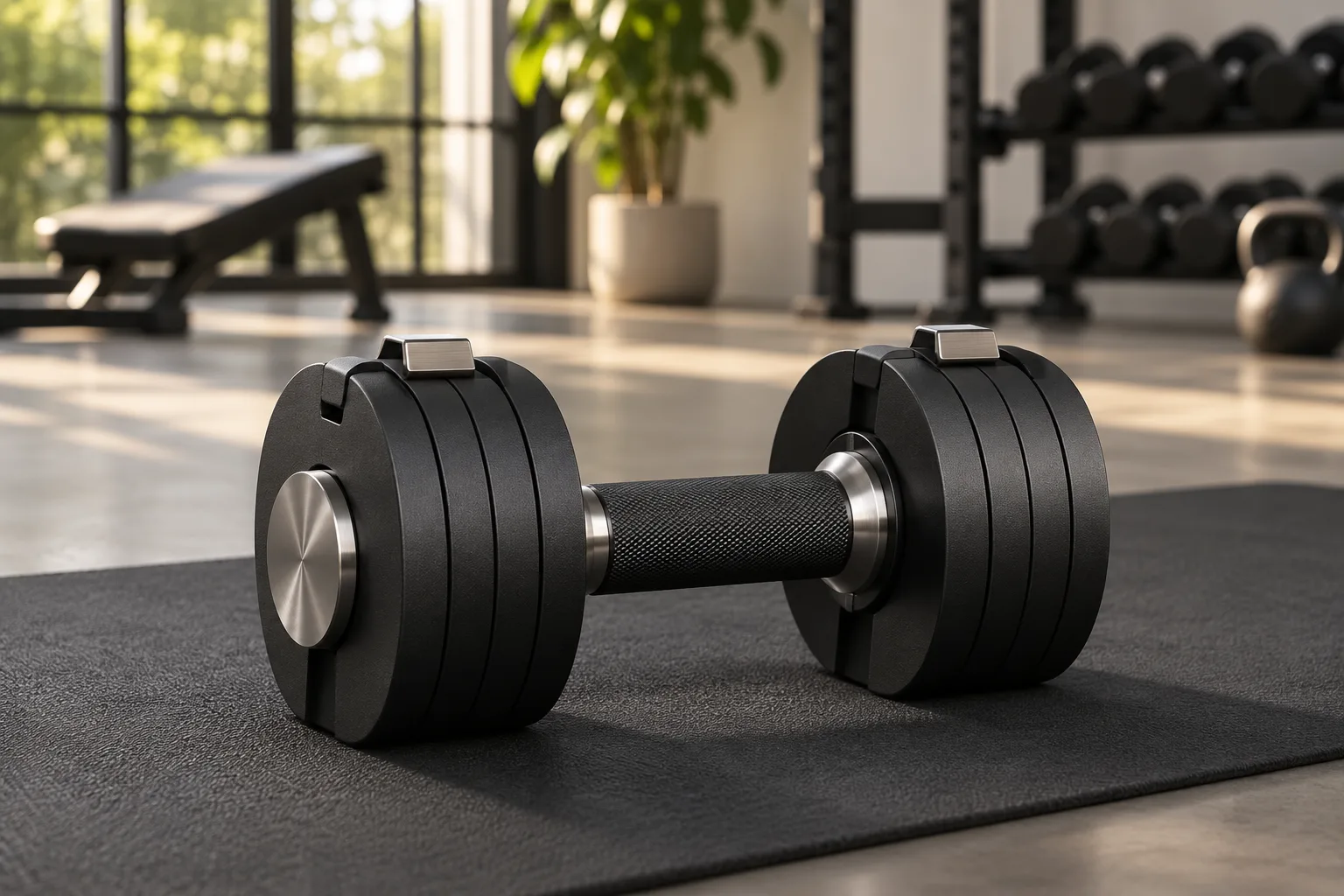
Can a simple setup outperform a gym membership?
Yes: a simple setup can deliver a better return on investment (ROI) than a gym membership when we train consistently and can meet our goals with limited equipment. It isn’t automatically the right choice for everyone. A home gym can remove obstacles; a commercial gym can provide equipment, instruction, and a sense of occasion that a spare room cannot.
For this decision, ROI means more than the price of a dumbbell or a monthly fee. We should count useful training, travel time, convenience, the quality of the program, our ability to stick with it, and the contribution exercise makes to long-term health. Equipment that gathers dust is a poor investment even if it was inexpensive. A membership used regularly may be worthwhile even when its headline price is higher.
At FitnessForLifeCo.com, we favor accessible, sustainable fitness that fits real schedules and goals. The question Can a simple setup outperform a gym membership? Reveal the 7 Reasons Minimal Training Delivers Maximum ROI is best answered by looking at the trade-offs, not by declaring one choice superior. We’ll compare costs, outline starter kits, and show how to progress with a small equipment list.
Keep that framing in mind as we ask again: Can a simple setup outperform a gym membership? Reveal the 7 Reasons Minimal Training Delivers Maximum ROI. It can, if the setup supports training we actually do. And when we weigh Can a simple setup outperform a gym membership? Reveal the 7 Reasons Minimal Training Delivers Maximum ROI, the deciding measure is not how impressive the room looks, but whether it makes a safe, sustainable routine easier to maintain.

Seven reasons minimal training can deliver strong ROI
A small kit can make training easier to begin, but no piece of equipment guarantees consistency or progress. The seven reasons below are potential advantages, each with a trade-off. Programming, recovery, and regular practice matter more than the number of machines in a room.
- Lower recurring costs. Once we’ve made the initial fitness equipment investment, a home setup may avoid recurring membership fees. That advantage depends on equipment durability, maintenance, and eventual replacement costs.
- Less travel and scheduling friction. Training at home removes the commute and can make a short session easier to fit between work and family responsibilities. A gym may still be more practical if home is crowded or distracting.
- An easier routine to build. A mat and resistance bands within reach can reduce the effort needed to start. Yet convenience alone won’t carry a routine through changing priorities; a schedule and a plan still help.
- Equipment selected for personal goals. We can buy only what supports our training, rather than relying on a facility’s equipment mix. The limit is variety: a gym can offer tools we can’t reasonably store at home.
- Progressive training with a small kit. Bodyweight movements, bands, dumbbells, or a barbell can support progression when exercise choice and difficulty are managed carefully. A small kit won’t meet every heavy-lifting goal.
- Durable purchases may reduce replacements. Choosing well-made equipment and inspecting it may help avoid premature replacement. Durability is not a promise that equipment will last indefinitely.
- A setup can adapt. We can add a bench or heavier plates as needs change, rather than buying everything at once. Expansion still costs money and requires space.
People may stop using a gym for many reasons: schedule, access, cost, or changing priorities. We shouldn’t treat a claim that a particular percentage of members never attend as verified without a reliable source. Convenience may help some people train more often; others thrive on classes, the structure of a facility, or the social energy of exercising around others. When we ask, Can a simple setup outperform a gym membership? Reveal the 7 Reasons Minimal Training Delivers Maximum ROI, the honest answer depends on which environment makes our own training more likely to happen.
The same question—Can a simple setup outperform a gym membership? Reveal the 7 Reasons Minimal Training Delivers Maximum ROI—has a practical test: consider the sessions we can realistically complete in each setting, not an ideal week. And Can a simple setup outperform a gym membership? Reveal the 7 Reasons Minimal Training Delivers Maximum ROI only if the setup and plan match the person using them.
Home gym versus gym membership: compare the real costs
To compare a home gym with a gym membership, we need the value of useful, consistent training relative to its full cost. Comparing a membership’s monthly fee with a single equipment purchase leaves out important expenses on both sides. Choose the same time period for each option, then list every cost we expect to pay.
For a membership, include any initiation charges, monthly fees, transport, and the time spent getting there. If the membership includes classes, coaching, showers, or specialized equipment we use, record that value too. For a home setup, count upfront costs, delivery if applicable, maintenance, secure storage, and likely replacement costs. Gym ownership shifts equipment upkeep and facility costs to us; a membership generally leaves the provider responsible for maintaining the equipment and building.
We can estimate a break-even point without guessing at prices:
- Add the purchase cost of the home equipment and subtract any realistic resale value, if we choose to include it. This is the setup’s net upfront cost.
- Work out the gym’s recurring monthly cost we would actually avoid, including membership fees and any transport expense that disappears.
- Divide the net upfront cost by the monthly cost avoided to estimate how many months it would take for avoided costs to match the home investment.
- Adjust the comparison for home maintenance, replacement costs, and any membership fees we’ll continue paying during the transition.
This is a planning tool, not a guarantee of savings. A reader wondering whether $200 a month is expensive should compare that fee with their budget, attendance, included services, and available alternatives. The amount alone doesn’t determine value: a rarely used membership can be poor value for one person, while another may use its pool, classes, or coaching regularly.
When we consider Can a simple setup outperform a gym membership? Reveal the 7 Reasons Minimal Training Delivers Maximum ROI, the answer can change as attendance or needs change. The same comparison—Can a simple setup outperform a gym membership? Reveal the 7 Reasons Minimal Training Delivers Maximum ROI—should include time and training quality, not just cash. Ask Can a simple setup outperform a gym membership? Reveal the 7 Reasons Minimal Training Delivers Maximum ROI over a period we can actually evaluate, then revisit the numbers after that period.

Choose a starter setup for your space, budget, and goals
Start with what we want to train and how much room we can safely use. Then buy only equipment that supports a realistic plan. Before placing an order, picture where each item will live, where we’ll move during a session, and whether it can be stored securely when training is over.
For a low-cost or very small-space option, bodyweight training can begin with squats, push-ups, split squats, and hip hinges. Resistance bands are compact, space-saving equipment that can add resistance for rows, presses, and other movements. This combination can support general strength, but bands and bodyweight exercises may not suit every loading goal—particularly when we want to practice heavy barbell lifts.
A modest strength-training setup might use adjustable dumbbells, which allow several loads without filling a room. Alternatively, a basic barbell and weight plates can support a range of strength exercises, provided we have enough clear floor space and a safe place to store the plates. Check that the equipment is suitable for its intended use and that nothing will tip, roll, or obstruct a doorway.
For heavier barbell training, a squat rack or power rack, compatible weight plates, a barbell, and an adjustable bench may be appropriate. This requires more than a spare corner: the rack must be stable and assembled according to its instructions, the floor and surrounding area must suit the setup, and the equipment must be durable enough for its intended loads. A pull-up bar can expand exercise choices, but its installation and the structure supporting it matter; never assume a doorway or fixture is suitable without checking manufacturer guidance.
Multi-functional equipment can serve several exercises without filling a room. Before buying, confirm that it fits the available space, feels stable for the movements planned, and supports exercises we will actually perform. Equipment maintenance matters too: inspect bands for damage, check fasteners and moving parts, and look over racks, benches, barbells, and plates before use. The question Can a simple setup outperform a gym membership? Reveal the 7 Reasons Minimal Training Delivers Maximum ROI depends partly on whether the setup is safe and usable, not merely compact.
Keep Can a simple setup outperform a gym membership? Reveal the 7 Reasons Minimal Training Delivers Maximum ROI in perspective while choosing gear: buy for the program, not the image of a future training life. When we ask Can a simple setup outperform a gym membership? Reveal the 7 Reasons Minimal Training Delivers Maximum ROI, the right starter kit is the smallest one that supports our next practical step.
Build progressive overload with a small equipment list
A small setup can support progressive training if we use a coherent plan and gradually make the work more challenging. Start with a handful of movement patterns, choose exercises that fit the equipment, record what we do, and progress while preserving sound technique. The equipment list does not write the program for us.
- Choose movement patterns. Include a squat, a push, a pull, and a hip hinge; carries or loaded holds can be added where they fit our goals and space.
- Match exercises to equipment. Use a squat variation for the squat pattern, push-ups or bench presses for pushing, rows or pull-ups for pulling, and dumbbell or barbell hip hinges. Carry a load or hold it securely when appropriate.
- Record sessions. Note the exercise, load or variation, repetitions, sets, and any change in technique or difficulty. A simple notebook is enough.
- Increase the challenge gradually. Add load when available, or first make the movement more demanding in a controlled way. Don’t trade sound form for a heavier number.
Progression can mean more repetitions within a planned range, slower and more controlled repetitions, a greater range of motion, a harder exercise variation, or carefully added sets. For example, when standard push-ups become manageable, we might first add controlled repetitions, then choose a harder variation rather than rushing to add volume. A supported split squat can train the legs when there’s no squat rack. If there’s no pull-up bar, choose an appropriate dumbbell or band row. Without a bench, a floor press can serve as a pushing exercise.
Training difficulty should rise in steps, not leaps. Leave room for recovery and pay attention to form; if a movement becomes unstable or uncomfortable, adjust it rather than forcing the planned progression. When we ask Can a simple setup outperform a gym membership? Reveal the 7 Reasons Minimal Training Delivers Maximum ROI, the answer rests on the training process as much as the gear. And Can a simple setup outperform a gym membership? Reveal the 7 Reasons Minimal Training Delivers Maximum ROI if we can apply that process consistently, without pretending that a minimal setup removes the need for planning.
Can a simple setup outperform a gym membership? Reveal the 7 Reasons Minimal Training Delivers Maximum ROI is not a promise that every goal can be served by the same handful of movements. The value lies in selecting substitutions and progressions that fit the person, space, and equipment.
Disclosure: As an Amazon Associate, I earn from qualifying purchases.
Know when the gym, a coach, or specialized equipment is worth it
A gym membership can be the better choice when our goals require heavier or specialized equipment, when we want more exercise variety, or when home space is too limited for a safe setup. A suitable training environment matters too. Someone who finds home training isolating or easily interrupted may do better in a facility with classes, coaching, or other people working nearby.
Beginners can learn basic movements with bodyweight or light loads, but no one needs to guess about equipment setup or technique. If we’re unsure how to perform an exercise, arrange a rack, or progress safely, qualified coaching can help. Personalized coaching may be available in person or virtually; what matters is that the instruction suits our abilities and goals rather than simply adding complexity.
Practical precautions belong in either setting. Inspect equipment before use, train on a stable surface, learn safe rack and barbell setup, and increase difficulty gradually. Stop or modify a movement that causes concerning pain. A pull-up bar and power rack need appropriate installation or setup; follow manufacturer guidance, and don’t use unstable fixtures or improvised supports. More equipment can expand what we can do, but it also creates more setup and maintenance responsibilities.
People with relevant health concerns, injuries, or uncertainty about exercise suitability should seek individualized advice from an appropriate health professional. That advice can clarify which movements and loads make sense; it needn’t prevent all activity. For a person whose plan depends on specialized machines, heavy loading, or hands-on instruction, the gym’s added cost may buy access and support that a home kit cannot reasonably provide.
So Can a simple setup outperform a gym membership? Reveal the 7 Reasons Minimal Training Delivers Maximum ROI has a different answer for someone who needs a rack, coach, or supportive group. We should ask Can a simple setup outperform a gym membership? Reveal the 7 Reasons Minimal Training Delivers Maximum ROI only after identifying what safe progress requires. In some cases, the best value is a gym, or a home setup supplemented with occasional coaching.
Membership models offer lessons in retention and community
A gym’s business model and an individual’s training decision are related, but they are not the same calculation. Gyms depend on membership retention and customer acquisition costs: they need members to stay, and they spend resources attracting new ones. A subscription model, membership tiers, and recurring revenue influence which services a facility can offer. We shouldn’t infer a gym’s profitability from a membership count alone; operating costs, pricing, facility size, and other conditions all matter.
For members, the useful question is what the fee makes possible. Classes can provide a schedule and instruction. Coaching can offer feedback and a plan. Community engagement may come through familiar faces, private groups, or fitness challenges that give participants a shared goal. Virtual training can extend instruction and accountability beyond the gym floor, which may suit members who travel or need a more flexible schedule.
Different training cultures serve different people. A CrossFit class, for example, can combine group instruction and varied workouts, but its format may not suit every goal or preference. Female athletes, like other athletes, may value access to specialized equipment, knowledgeable coaching, and a community that supports their particular training needs. Those benefits should be judged by fit and quality, not by the mere presence of a class name or online group.
Before renewing or switching, list the services we use, how often we attend, and which features make consistency easier. Mark the classes, equipment, coaching, and virtual options that genuinely matter. If we pay for a tier with services we don’t use, a different plan—or a home setup—may make more sense. If the membership’s structure keeps training on the calendar, its value may be greater than a simple comparison of fees suggests.
This is why Can a simple setup outperform a gym membership? Reveal the 7 Reasons Minimal Training Delivers Maximum ROI is a personal choice, not a verdict on how gyms should run. Ask Can a simple setup outperform a gym membership? Reveal the 7 Reasons Minimal Training Delivers Maximum ROI after measuring the support we actually use. And Can a simple setup outperform a gym membership? Reveal the 7 Reasons Minimal Training Delivers Maximum ROI may depend on whether community, classes, or virtual training helps us return when motivation shifts.
Choose your setup and take the next step
The best option is the one we can use consistently, safely, and affordably—not the one with the most equipment or the lowest headline price. A home gym may reduce travel and recurring costs, while a membership may offer variety, instruction, and a training environment that makes it easier to show up. Neither choice earns its value before we use it.
Make the decision in a few deliberate steps:
- Name the goal. Decide whether the priority is general strength, heavier barbell work, conditioning, mobility, or a mix.
- Track the current routine. Record attendance and travel time for a membership, or note how often home sessions actually happen.
- Compare full costs. Use the same time period and include fees, transport, equipment upfront costs, maintenance, and likely replacement costs.
- Check space and safety. Measure the training area and verify that any equipment can be installed, used, and stored safely.
- Test before committing further. Try a small home setup or a trial membership, then review whether it supports a repeatable schedule.
Beginners may start with bodyweight movements and bands. Busy professionals and parents may value a short session close to home; older adults may prioritize suitable exercises, confidence, and advice tailored to their needs. Experienced lifters may need durable equipment, heavier loads, or access to a specialized facility. One kit list cannot serve everyone.
At FitnessForLifeCo.com, we treat fitness as part of lifelong health, not a quick fix or a room to furnish. Start with a sustainable routine, review what is changing, and add equipment or support only when it solves a real problem. Ask once more, Can a simple setup outperform a gym membership? Reveal the 7 Reasons Minimal Training Delivers Maximum ROI? It can when it fits our goals and makes consistent training possible. The title’s question—Can a simple setup outperform a gym membership? Reveal the 7 Reasons Minimal Training Delivers Maximum ROI—ends not with a universal answer, but with a next step: choose the smallest safe, useful experiment and see whether it earns a place in our lives. If Can a simple setup outperform a gym membership? Reveal the 7 Reasons Minimal Training Delivers Maximum ROI is the question we began with, the answer will come from the routine we can sustain.
Key Takeaways
- Compare full costs over the same period, including travel, fees, maintenance, and replacement—not just the membership price or equipment purchase.
- A minimal setup can support progressive strength training when its exercises, substitutions, and progression fit your goals.
- Convenience may help some people train consistently; others benefit more from a gym’s equipment, classes, coaching, or community.
- Start with a safe, realistic plan and a small amount of suitable equipment; expand only when it solves a genuine training need.
Frequently Asked Questions
Why do 67% of people with gym memberships never go?
That percentage shouldn’t be treated as verified without a reliable source. People may stop attending because of schedule conflicts, access, cost, changing priorities, or because the facility no longer fits their needs.
Is $200 a month expensive for a gym membership?
It depends on your budget, how often you attend, and what the membership includes. Compare the fee with the value of services you actually use—such as classes, coaching, or specialized equipment—and with realistic alternatives.
How can we maximize gym progress?
Choose a clear goal, follow a progressive plan, record your training, and increase difficulty gradually while maintaining good technique. Consistency, recovery, and suitable coaching when needed matter more than using every machine in the facility.
How many memberships does a gym need to be profitable?
There is no universal membership count. Profitability depends on factors such as pricing, rent, staffing, equipment, operating costs, and how often members use the facility.
Can we build strength with a minimal home gym?
Yes, a well-planned routine using bodyweight exercises, bands, dumbbells, or barbells can build strength. The equipment and progression need to suit your goals, and heavier or specialized training may require more space or gym access.
When is a gym membership better than a home setup?
A gym may be the better fit if you need heavier or specialized equipment, classes, coaching, or a more structured training environment. It can also make sense when home space is too limited for safe exercise.
Disclosure: As an Amazon Associate, I earn from qualifying purchases.
Discover more from Fitness For Life Company
Subscribe to get the latest posts sent to your email.