

How to make bodyweight workouts progressive: start with a clear plan
Bodyweight training can build strength when we make movements gradually more challenging. Progressive overload means increasing the demand on the body over time; it doesn’t require adding weights. The phrase “How to make bodyweight workouts progressive? Use These 7 Scaling Techniques for Constant Growth” points to a practical idea: we can change an exercise’s difficulty while keeping the movement recognizable.
Scaling workouts means adjusting an exercise to suit our current ability, then progressing when we can perform it with control and repeat it reliably. A push-up against a wall, for example, can be a useful starting point—not a lesser version to rush past. Our fitness level, movement quality, effort, and recovery all help determine what comes next.
Full-body workouts built around compound exercises train several muscle groups in one session. Push-ups involve the pectorals, triceps, shoulders, and core; squats challenge the quadriceps and glutes. Rows, lunges, bridges, and planks can round out a routine. Together, these movements support upper-body strength, core strength, mobility, and functional strength for everyday tasks.
We don’t need a large room, a full set of equipment, or years of experience to begin. We need a plan that fits our time and circumstances, and that we can return to. “How to make bodyweight workouts progressive? Use These 7 Scaling Techniques for Constant Growth” is less about chasing an advanced exercise than finding the next manageable step. We’ll cover seven ways to scale, how to track change, and how to balance training with recovery. “How to make bodyweight workouts progressive? Use These 7 Scaling Techniques for Constant Growth” is most useful when progress serves a sustainable practice—not a deadline.

What does progressive overload look like in bodyweight training?
In bodyweight training, resistance comes from moving or holding the body against gravity. Push-ups, squats, pull-ups, lunges, planks, and glute bridges all use body weight as resistance, though each challenges the body differently. Progressive overload happens when we increase that challenge in a planned way while maintaining sound exercise technique.
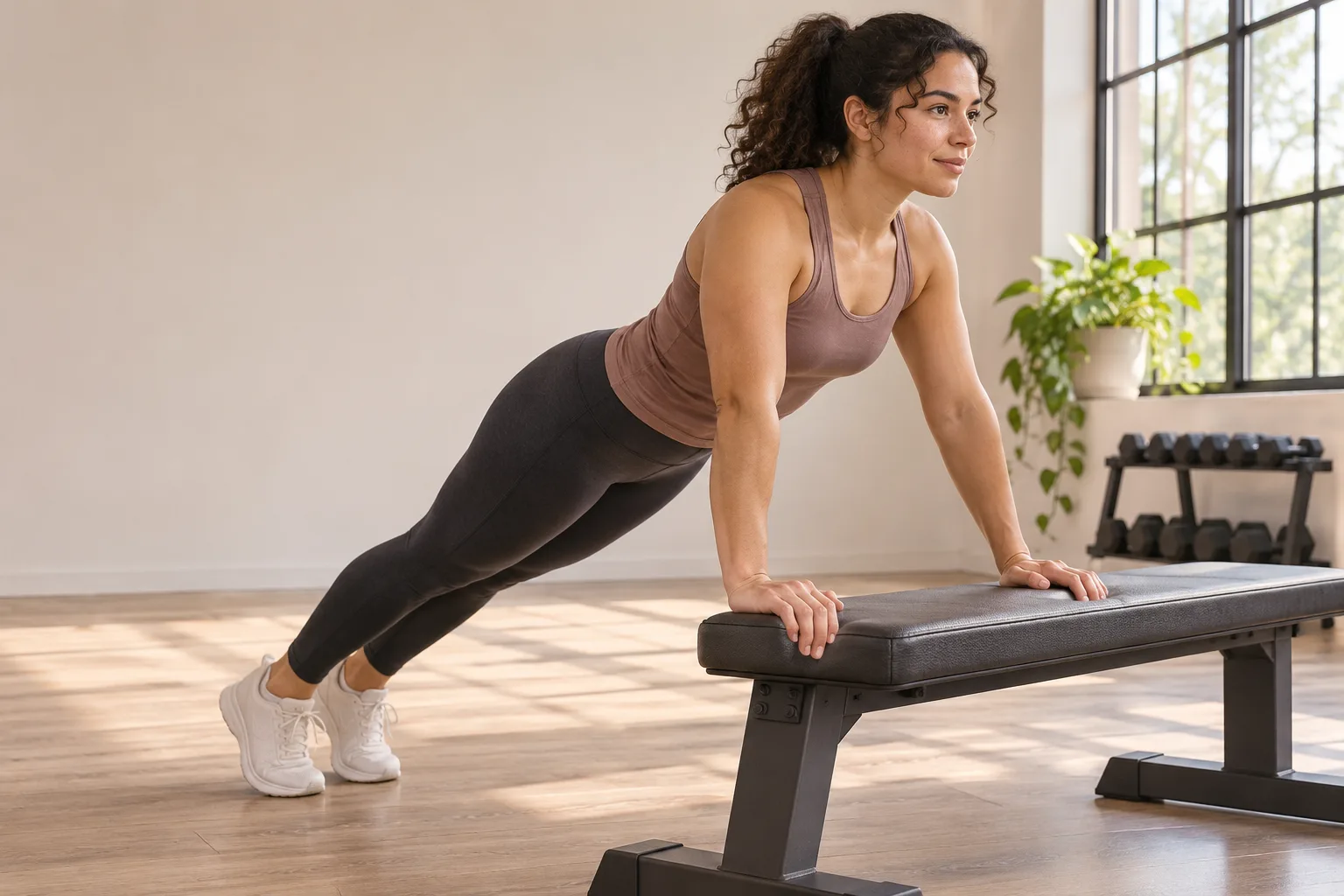
We can change exercise variations, repetitions, sets, tempo, pauses, range of motion, leverage, or whether a movement uses one or both sides. For example, we might make a push-up easier by raising our hands on a stable surface, then lower that surface as strength improves. Or we might keep the same variation and add a controlled repetition, provided we can preserve the same body position.
The “3-3-3 rule” has different interpretations in fitness contexts. Rather than assume there is one universal meaning, we should follow a clearly defined plan that tells us what the numbers refer to. The “80/20 rule” in calisthenics can also serve as a programming heuristic, not a requirement: we might devote most practice to foundational movements and a smaller share to specialized skills if those interest us.
“How to make bodyweight workouts progressive? Use These 7 Scaling Techniques for Constant Growth” begins with more than simply doing more work. Training volume—the amount of work we complete through sets and repetitions—can rise, but it is only one part of the picture. Workout intensity and technique matter too: a harder variation is useful when we can control it, and adequate recovery lets us repeat quality work. “How to make bodyweight workouts progressive? Use These 7 Scaling Techniques for Constant Growth” should mean a gradual, observable increase in demand, not a race to fatigue. “How to make bodyweight workouts progressive? Use These 7 Scaling Techniques for Constant Growth” leaves room for a sensible plan rather than a one-size-fits-all rule.
Seven scaling techniques for steady progress
We can scale a movement by changing one main feature at a time. That makes it easier to tell whether the new version is appropriate and to record what changed. The phrase “How to make bodyweight workouts progressive? Use These 7 Scaling Techniques for Constant Growth” describes a set of options, not seven steps that everyone must complete in order.
- Adjust leverage. Start with incline push-ups against a stable elevated surface. As they become controlled and repeatable, lower the hand position. A more upright angle makes the movement easier; choose a height that lets you keep a steady body line.
- Change the exercise variation. Move from supported squats to bodyweight squats, then consider more demanding squat variations. Advance only when your knees and torso stay controlled through the version you’re using.
- Expand safe range of motion. Begin with a comfortable range, then gradually work toward a fuller range when mobility and form allow. Don’t force depth or push into pain to make a repetition count.
- Slow the tempo. Take more time during the lowering phase of a push-up or squat instead of dropping quickly. Choose this when you can already manage the basic movement but want to make each repetition more deliberate.
- Add pauses. Briefly hold a stable position, such as the bottom of a squat or the top of a row, without losing alignment. If you can’t keep the position steady, shorten the pause or return to a regular repetition.
- Increase repetitions or sets. Add a small amount of quality work when current sets feel controlled and recovery remains good. Stop adding work if technique deteriorates or familiar sessions become unusually difficult.
- Use unilateral work. Progress toward split squats or single-leg glute bridges to challenge each side separately. Start with support if needed, and use it until balance and control are reliable.
These techniques can be combined gradually, but changing one main variable at a time makes progress easier to judge. “How to make bodyweight workouts progressive? Use These 7 Scaling Techniques for Constant Growth” can start with a single adjustment, such as a lower push-up incline. “How to make bodyweight workouts progressive? Use These 7 Scaling Techniques for Constant Growth” doesn’t require us to change tempo, range, sets, and variation all at once.

How to scale push-ups, squats, rows, and pull-ups
Push-ups offer a clear upper-body progression: begin with wall or high-incline push-ups, lower the incline over time, then try floor push-ups. Harder variations can wait until the basic floor version remains controlled. Push-ups train the pectorals, triceps, shoulders, and core. Keep a stable body line, and choose a range of motion you can complete without pain.
For squats, begin with a supported version or a comfortable range. Work toward controlled, fuller-range bodyweight squats as mobility and form allow, then consider unilateral variations. The quadriceps and glutes are key working muscles. A useful check is whether you can lower and rise without losing balance or control; if not, keep support or adjust the range.
For pulling strength, ring rows can be scaled by changing body angle. Stand more upright to make a row easier; move closer to horizontal to make it harder. Use securely installed equipment and check that it is stable before training. Jumping pull-ups and banded pull-ups can also help us practise pull-up patterns. Use a controlled lowering phase and a secure setup; neither is a mandatory step.
Wall walks are a demanding shoulder and core exercise. Introduce them only when you can control the position, use a clear wall, and stop before form breaks down. If an exercise feels unstable or painful, choose a simpler variation instead. “How to make bodyweight workouts progressive? Use These 7 Scaling Techniques for Constant Growth” applies across these movements: we change a manageable feature, then reassess control. “How to make bodyweight workouts progressive? Use These 7 Scaling Techniques for Constant Growth” can mean a lower push-up incline or a more upright row, not necessarily a pull-up. “How to make bodyweight workouts progressive? Use These 7 Scaling Techniques for Constant Growth” works best when the next variation fits our current ability.
Examples of exercises that use body weight for resistance include push-ups, squats, rows, pull-ups, lunges, planks, and glute bridges. Each can be scaled to fit a different starting point.
Track progress and choose when to advance
A simple workout log helps us distinguish a real change from a day that merely felt easier. Record the exercise variation, sets, repetitions, rest periods, and notes on technique and perceived difficulty. For example, write “incline push-up, hands on counter, three sets, controlled body line” rather than only “push-ups.” That detail makes it easier to repeat the same test later.
Use benchmarks we can reproduce: completing the same variation with consistent form, or adding controlled repetitions before moving to a harder version. Change one variable at a time—leverage, tempo, repetitions, range, or sets—so the log shows what created the new challenge. If we lower the incline and add repetitions in the same session, we may not know which change made the exercise feel harder.
Use this progression rule:
- Advance when all planned work is completed with sound technique and recovery remains manageable.
- Hold steady when the work feels challenging but form remains sound.
- Regress when technique repeatedly fails, pain appears, or fatigue undermines control.
Progress isn’t limited to harder exercises. We may notice better control, a fuller comfortable range, or more consistent sessions. “How to make bodyweight workouts progressive? Use These 7 Scaling Techniques for Constant Growth” gives us a way to plan change; the log helps us see when the change is appropriate. “How to make bodyweight workouts progressive? Use These 7 Scaling Techniques for Constant Growth” can include repeating the same version until it feels dependable. “How to make bodyweight workouts progressive? Use These 7 Scaling Techniques for Constant Growth” should leave room for gradual improvement rather than treating every workout as a test.
Disclosure: As an Amazon Associate, I earn from qualifying purchases.
Build a routine across beginner, intermediate, and advanced levels
A practical full-body workout can include a push, a squat or lunge, a pull or row, a hip-extension movement, and a core exercise. Choose variations that match your ability, space, and equipment. The examples below are starting points, not a ranking: the right version is the one you can perform with control.
- Beginner: incline push-ups, supported squats, upright ring rows where safe equipment is available, glute bridges, and an accessible core hold.
- Intermediate: floor push-ups, controlled squats or split squats, more horizontal ring rows, single-leg glute bridges, and a more demanding plank.
- Advanced: harder push-up variations, unilateral lower-body work, challenging ring-row angles or pull-up progressions, wall walks when appropriate, and controlled core variations.
Sets and repetitions are adjustable starting points, not universal prescriptions. Choose a manageable amount that leaves room for quality movement and recovery. If the last repetitions repeatedly lose control, reduce the work or choose an easier variation. If a movement remains easy while technique stays consistent, we can adjust one variable in a later session.
Pull-up practice can include jumping pull-ups or banded pull-ups when the setup is suitable and the lowering phase remains controlled. Ring rows provide another scalable pulling option, especially when a full pull-up isn’t yet manageable. “How to make bodyweight workouts progressive? Use These 7 Scaling Techniques for Constant Growth” means matching the exercise to our current fitness level, then making a considered adjustment. “How to make bodyweight workouts progressive? Use These 7 Scaling Techniques for Constant Growth” doesn’t require every person to use the same weekly volume or reach the same variation. “How to make bodyweight workouts progressive? Use These 7 Scaling Techniques for Constant Growth” can be a simple full-body plan repeated consistently, with one small change when readiness is clear.
Balance challenge with recovery and fatigue management
Progressive overload depends on recovery as well as effort. Hard sessions need to be balanced with rest days or easier training, particularly when full-body workouts use several muscle groups at once. A plan that adds work faster than we can recover from may make technique less reliable and sessions harder to sustain.
Check for signs that fatigue is interfering: declining technique, familiar sets feeling unusually difficult, persistent soreness, or reduced willingness to train. If these appear, reduce training volume or choose an easier exercise variation. We don’t need to take every set to failure. Finish when another repetition would likely compromise control; that keeps the focus on useful, repeatable work.
Consistency also depends on practical fit. A schedule that allows for work, family, travel, and other responsibilities is more useful than a burst of effort that cannot last. If a planned session is too demanding for a busy week, a shorter or easier session can help us maintain the habit without pretending that every day has the same demands.
The broad principle is similar in weight training: gradually increase a manageable training demand while maintaining technique and recovery. Bodyweight trainees often adjust leverage or exercise variation rather than adding load. “How to make bodyweight workouts progressive? Use These 7 Scaling Techniques for Constant Growth” should make room for easier days and rest, not only harder movements. “How to make bodyweight workouts progressive? Use These 7 Scaling Techniques for Constant Growth” is about sustainable challenge. “How to make bodyweight workouts progressive? Use These 7 Scaling Techniques for Constant Growth” works over time when the plan respects the body’s ability to recover.
Make your next workout the first step
For your next workout, choose one push, one lower-body movement, one pulling movement, and one core exercise. Select variations that allow controlled practice: perhaps an incline push-up, a supported squat, a safe ring row, and a comfortable plank. Record what you did, including the variation, sets, repetitions, rest periods, and a brief note about technique and effort.
Before increasing difficulty, review that record. If the planned work was controlled and recovery manageable, choose one progression technique for the next training block—such as lowering the incline, adding a pause, or increasing a small amount of quality work. Keep the other movements steady for now. If form repeatedly breaks down or pain appears, regress or seek qualified guidance as appropriate.
At FitnessForLifeCo.com, we treat accessible, sustainable fitness as support for strength, mobility, and well-being over time—not a quick fix. We can adapt the plan to our space, schedule, equipment, and current ability. For medical concerns or pain that affects exercise choices, qualified guidance can help us choose an appropriate path.
“How to make bodyweight workouts progressive? Use These 7 Scaling Techniques for Constant Growth” comes down to a repeatable sequence: choose, practise, record, review, then adjust. Start with the movement you can control today. “How to make bodyweight workouts progressive? Use These 7 Scaling Techniques for Constant Growth” does not demand that we change everything at once. “How to make bodyweight workouts progressive? Use These 7 Scaling Techniques for Constant Growth” is a practical way to make the next session a little more purposeful while keeping lifelong fitness in view.
Key Takeaways
- Progressive overload in bodyweight training can come from changing leverage, variation, range, tempo, pauses, repetitions, sets, or using one side at a time.
- Choose exercises that match your current ability, and change one main variable at a time so progress is easier to assess.
- Log exercise variations, sets, repetitions, rest, technique, and perceived difficulty; use the record to decide whether to advance, hold steady, or regress.
- Recovery matters: adjust training volume or difficulty when fatigue repeatedly affects technique, familiar sets, or willingness to train.
- Start your next session with controlled push, lower-body, pulling, and core movements, then review before making the next change.
Frequently Asked Questions
What are some exercises that use body weight to create resistance?
Push-ups, squats, rows, pull-ups, lunges, planks, and glute bridges use body weight as resistance. We can adjust their leverage, range of motion, tempo, or variation to match our ability.
What is the 3-3-3 rule for working out?
The phrase can refer to different approaches in fitness, so there isn’t one universal interpretation. Follow a clearly defined program that explains what its numbers mean rather than assuming every plan uses the same rule.
What is the 80/20 rule in calisthenics?
It can be used as a programming heuristic: spend most practice on foundational movements and a smaller share on specialized skills, if desired. It isn’t a universal requirement, and the balance should suit your goals and experience.
How do you progressively overload weight training?
Gradually increase a manageable training demand while keeping technique sound and allowing for recovery. Depending on the plan, that may mean changing load, repetitions, sets, or another training variable.
How do we know when to progress a bodyweight exercise?
Advance when you can complete the planned work with consistent technique and recovery remains manageable. Hold steady if the work is challenging but controlled, and regress if form repeatedly fails, pain appears, or fatigue undermines control.
Can beginners use progressive overload with bodyweight exercises?
Yes. Beginners can start with accessible variations such as wall or incline push-ups and supported squats, then adjust difficulty when those movements are controlled and repeatable. Progress can be as modest as changing leverage or adding a small amount of quality work.
Disclosure: As an Amazon Associate, I earn from qualifying purchases.
Discover more from Fitness For Life Company
Subscribe to get the latest posts sent to your email.