

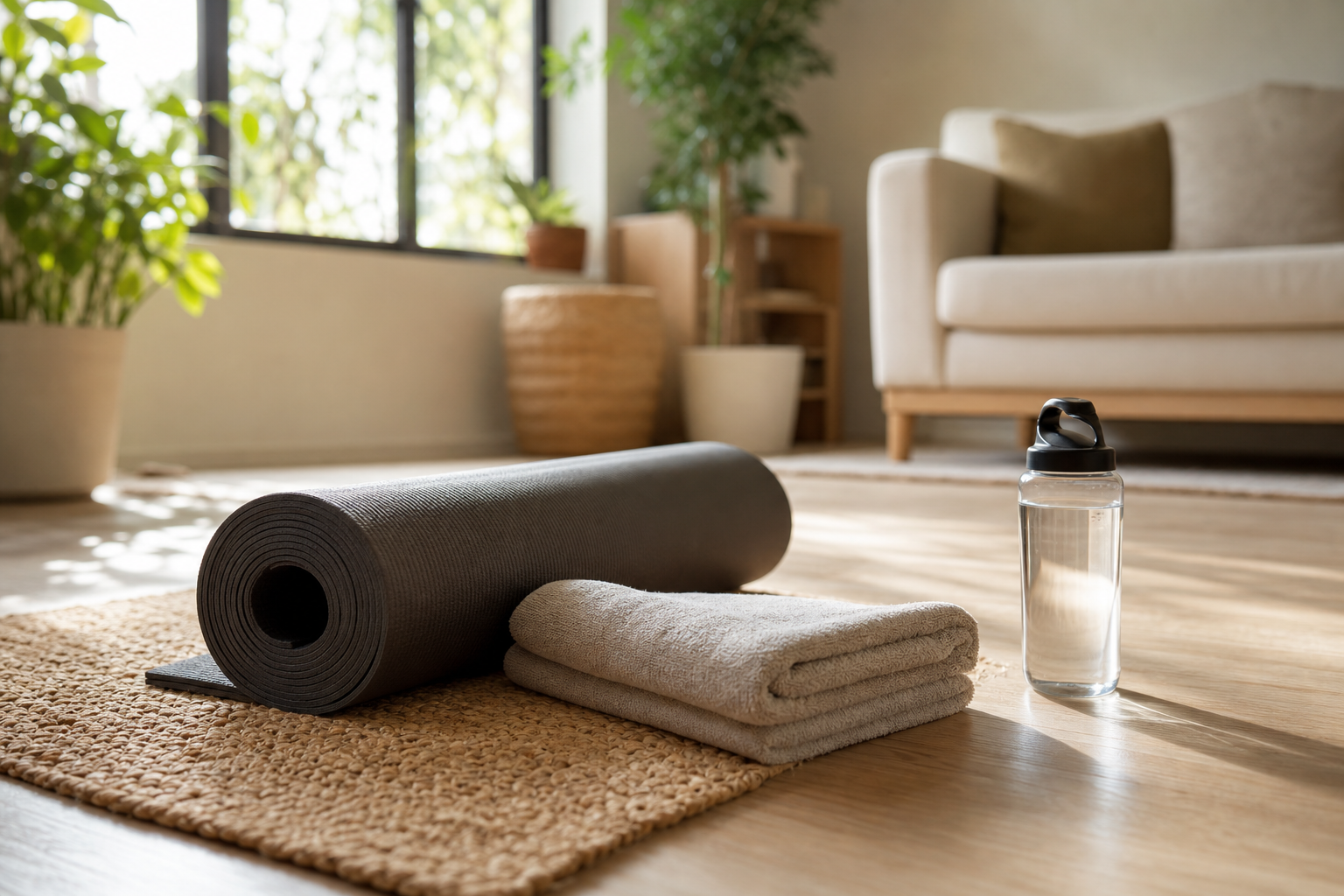
Introduction: Why flexibility starts in the small rooms of daily life
The answer is simple, though not always easy: How to improve flexibility with home training? Unlock 6 Daily Stretches That Boost Mobility and Health by building a short daily routine that can live inside ordinary time—before coffee, between meetings, after school pickup, beside a hotel bed, or while dinner warms on the stove.
Flexibility is not a party trick. It is the quiet usefulness of reaching a high shelf without wincing, walking with a longer stride, lifting a laundry basket safely, sitting on the floor with a child, or standing up from a chair without that first stiff, careful step. In 2026, as hybrid work keeps many people seated for long blocks and more adults choose home workouts over crowded gyms, mobility has become less about performance and more about daily freedom.
At FitnessForLifeCo.com, we believe fitness should fit real rooms and real schedules. We recommend consistency before perfection, and we build routines that ask for little equipment: a chair, a wall, a towel, a mat, sometimes only the floor and your attention.
Based on our research into beginner home training, the people who improve most are rarely the ones who stretch hardest. They are the ones who return. Here, we define flexibility and mobility, explain realistic timelines, teach 6 daily stretches, offer safe modifications, and help you create a routine that stays with you past the first burst of motivation.

What flexibility really means—and how it differs from mobility
Flexibility is a muscle’s ability to lengthen. Mobility is a joint’s ability to move with control through a useful range. One is about available length; the other is about what you can actually do with it when life asks—when you squat to pick up a dropped spoon, climb stairs with groceries, garden for 40 minutes, carry a toddler, or get up from the floor.
A person may touch their toes and still struggle to control the hips in a squat. Another may have tight hamstrings yet move safely because the hips, spine, and ankles share the work. This distinction matters at home because home training is not performed under perfect gym conditions. It happens near coffee tables, kitchen counters, pets, children, and uneven attention.
The American College of Sports Medicine has long included flexibility work as part of balanced fitness, while the CDC Physical Activity Guidelines advise adults to do muscle-strengthening activities at least 2 days per week. Harvard Health Publishing also notes that range of motion tends to decline with age unless we keep practicing it. That decline is not destiny. It is often a signal: the body adapts to what we ask of it most.
We found that many adults sit for 6 or more hours daily, especially with remote and hybrid work. By 2026, this pattern is normal enough to seem invisible: the hips folded, shoulders rounded, ankles still, neck angled toward a screen. How to improve flexibility with home training? Unlock 6 Daily Stretches That Boost Mobility and Health is not about forcing deeper positions. It is about teaching the body that movement is safe, repeatable, and useful.
Before you stretch: a 5-minute safety check
The first rule is plain: productive tension feels like a steady pull; warning pain feels sharp, electric, pinching, numbing, dizzying, or wrong. If symptoms travel into the arm or leg, if a joint feels trapped, or if you feel tingling or instability, stop and adjust. The goal is never to out-argue the body.
Before deeper static stretching, warm the tissues for 5 minutes. We recommend this simple sequence:
- March in place for 2 minutes, swinging the arms gently.
- Do 10 shoulder rolls forward and backward.
- Do 10 hip circles in each direction, holding a chair if needed.
- Do 10 bodyweight good mornings, hands on hips, hinging lightly.
- Do 5 slow squats to a chair or countertop height.
People recovering from surgery, pregnant readers, older adults with balance concerns, anyone with hypermobility, recent injury, arthritis flares, or chronic pain conditions should be more cautious. That does not mean they cannot train. It means the version must be chosen carefully, with support close by and intensity kept low—often around 3 out of 10.
Set up the room before you start. Use a wall, sturdy chair, towel, yoga mat, pillow, or step. Choose a non-slip surface. Move toys, shoes, pets, and laundry baskets out of the path. Based on our analysis of beginner home routines, the safest plans combine gentle range-of-motion work, controlled breathing, and strength support rather than long passive holds alone. A stretch should leave you more at home in the body, not less sure of it.
How long does it take to improve flexibility at home?
Most people feel less stiff within 1 to 2 weeks. Measurable flexibility changes usually take 4 to 8 weeks of consistent practice, depending on age, baseline mobility, training history, hydration, sleep, stress, and how much time the body spends folded into chairs. The first gains often feel subtle: shoes are easier to tie, the neck turns farther while driving, the first steps after sitting feel less guarded.
The dose does not need to be heroic. Aim for 5 to 10 minutes daily or 15 to 20 minutes at least 3 to 5 days per week. Hold most stretches for 20 to 45 seconds and repeat 1 to 3 times, especially on tighter sides. Studies on stretching commonly show improvement when holds last at least 30 seconds and are practiced several days weekly; older adults may need a longer consistency window, but they can still make meaningful gains in range, comfort, and confidence.
Expect the timeline to look different by person. A desk worker may notice looser hips in 10 days. A runner may need several weeks of calf and hamstring work before stride mechanics feel different. An older adult may value steadier stairs and easier chair transfers more than dramatic depth. In our experience, those practical wins are the ones that keep people going.
How to improve flexibility with home training? Unlock 6 Daily Stretches That Boost Mobility and Health works because the winning plan is not dramatic. It is repeatable. The body listens to repetition more than intensity, and it changes when the message becomes familiar.

The 6 daily stretches that build full-body mobility
This sequence covers the neck, shoulders, spine, hips, hamstrings, calves, and ankles without gym equipment. For beginners, it takes 8 to 12 minutes. With longer holds or a second round, it takes 15 to 18 minutes. That makes it realistic for busy professionals, parents, travelers, older adults, and fitness enthusiasts who already train but know their joints need daily care.
The order matters. Start with the upper body and breathing, then move through the spine and hips, and finish with the legs and ankles. This gives the nervous system time to settle. When the breath slows, the body often stops bracing; when the body stops bracing, a stretch becomes a conversation instead of a command.
Use one rule throughout: never chase the deepest version first. Choose the variation that lets you breathe steadily and feel no joint pain. A 2026 wearable may count minutes, streaks, recovery scores, and stiffness notes, and those tools can help. But we recommend using data as a lantern, not a judge. Track what helps: morning stiffness from 1 to 10, shoulder comfort, walking stride, or how easily you get down to the floor and back up.
If you have wondered, How to improve flexibility with home training? Unlock 6 Daily Stretches That Boost Mobility and Health, begin with this routine exactly as written for 7 days before adding more. Familiarity is part of the training.
Stretch 1: Neck and upper-trapezius release for screen tension
Sit tall or stand with both feet grounded. Let the shoulders become heavy, as if they have finally been given permission to stop working. Draw one ear toward the same-side shoulder and hold for 20 to 30 seconds, then switch sides. Keep the chin slightly tucked, not lifted.
This stretch helps with neck stiffness, upper-back tightness, screen posture, stress-related shoulder elevation, and tension from driving or laptop work. Many office workers spend 7 to 9 hours near screens on heavy workdays; the neck often tells the story first.
For a stronger but controlled stretch, place one hand under the chair and gently lean the head away. Do not pull down on the head if symptoms travel into the arm. This is the stretch to do after a video call—not because the body is broken, but because it has been trying to hold still for too long.
Stretch 2: Doorway chest stretch for posture and breathing
Stand in a doorway and place the forearms on the frame at roughly 90 degrees. Step one foot forward. Let the chest open without flaring the ribs or arching the lower back. Hold 20 to 45 seconds, breathing slowly into the sides of the ribs.
This stretches the pectorals, supports shoulder mobility, counters rounded posture, and may make deep breathing feel easier after long sitting periods. If the front of the shoulder pinches, lower the arms. If the stretch feels too mild, raise the arms slightly or work one side at a time.
The common mistake is leaning aggressively into the doorway. More is not better here. The better version feels like space opening across the collarbones, as if the chest is remembering a shape it once knew.
Stretch 3: Cat-cow to child’s pose for spine and hips
Start on hands and knees. Inhale as the chest moves forward and the tailbone lifts into cow. Exhale as the spine rounds into cat. Move between the two for 6 to 8 slow breaths, then press back into child’s pose for 30 seconds, widening the knees if needed.
This flow trains spinal flexion and extension, gently opens the hips, relaxes the back, and creates a bridge between tension and controlled movement. If the knees ache, place a pillow beneath them. If the wrists complain, use fists or forearms. If the floor is not comfortable, perform the same movement seated with hands on thighs.
The breath gives the stretch its shape. We found that people who rush this movement often miss its real value: it shows them where they have been holding stress—in the jaw, ribs, belly, back—and gives the body a quieter instruction.
Disclosure: As an Amazon Associate, I earn from qualifying purchases.
Stretch 4: Half-kneeling hip flexor stretch for sitting-heavy days
Kneel on one knee with the other foot forward. Tuck the pelvis slightly, squeeze the glute on the kneeling side, and shift forward only until the front of that hip lengthens. Hold 30 seconds per side. The stretch should be felt in the front of the hip, not jammed into the lower back.
This targets the hip flexors, supports walking stride, and reduces the closed-hip feeling created by desk work, commuting, and long evenings on the couch. If you sit 6 or more hours most days, this stretch deserves a permanent place in your routine.
For older adults or knee-sensitive readers, place thick padding under the knee, hold a chair for balance, or do a standing lunge version near a wall. Precision matters: if the low back arches, the body is borrowing motion from the spine instead of opening the hip.
Stretch 5: Seated hamstring stretch for the back of the legs
Sit on the edge of a sturdy chair. Extend one leg forward with the heel down and toes up. Hinge from the hips, keeping the spine long, and stop when you feel a stretch along the back of the thigh. Hold 20 to 45 seconds per side.
This helps the hamstrings, calves, posterior chain stiffness, bending patterns, walking comfort, and safer lifting mechanics. Touching the toes is not the goal. Moving from the hips with control matters more than folding deeply, especially for beginners who may round the back to chase a shape.
To progress, loop a towel around the foot and use light assistance. Then add slow ankle flex-and-point movements—5 to 8 reps—to bring the calf and sciatic nerve pathway into a safer, more dynamic rhythm. The movement should feel gliding, not gripping.
Stretch 6: Calf and ankle wall stretch for walking, balance, and stairs
Stand facing a wall. Step one foot back, keep the back heel down, toes forward, and knee straight to stretch the gastrocnemius. Hold 30 seconds per side. Then bend the back knee slightly while keeping the heel down to target the soleus, again holding 30 seconds per side.
Ankles deserve attention because limited ankle motion can affect squats, stair climbing, walking stride, balance, and knee tracking. A parent carrying groceries, an older adult stepping off a curb, and a runner beginning a warm-up all need ankles that can bend with confidence.
Avoid rolling the arch inward. If the stretch feels strained, move the back foot closer to the wall. Small adjustments matter here; the ankle is a small hinge with large consequences, and when it moves better, the knee and hip often stop overcompensating.
A step-by-step home flexibility plan for beginners
A good plan removes decisions. For the next 4 weeks, repeat the same 6 stretches, then adjust only after the body has had time to learn. We researched common barriers for home exercisers and found the biggest problem is not lack of equipment. It is lack of a routine that feels small enough to repeat on a messy Wednesday.
Use this 4-week plan:
- Week 1: Learn the 6 stretches with short holds of 20 seconds. Keep intensity gentle.
- Week 2: Increase most holds to 30 seconds. Notice which side feels tighter.
- Week 3: Add a second round to tight areas, especially hips, hamstrings, and calves.
- Week 4: Pair stretching with simple strength moves: 10 glute bridges, 8 wall angels, and 12 heel raises.
The weekly schedule is deliberately modest: 8 minutes on weekdays, 15 minutes on weekends, and one optional recovery day with only cat-cow and breathing. Measure progress without turning your body into a project. Note morning stiffness from 1 to 10, ease of putting on shoes, shoulder comfort in the doorway, squat depth near a chair, or walking stride length.
FitnessForLifeCo.com serves beginners, busy professionals, parents, older adults, and enthusiasts because each group needs a slightly different doorway into the same habit. Beginners use chair-supported versions. Professionals use a lunch-break routine. Parents invite children to join. Older adults keep a counter nearby. Enthusiasts add strength progressions. How to improve flexibility with home training? Unlock 6 Daily Stretches That Boost Mobility and Health becomes personal when the routine fits the life that already exists.
Common mistakes that keep flexibility from improving
The biggest mistakes are familiar: stretching cold too aggressively, bouncing into end range, holding the breath, ignoring strength, doing random stretches with no plan, comparing your range to someone younger or naturally bendier, and quitting after 3 days because the change was not dramatic enough.
Overstretching can backfire because the nervous system may guard more strongly when a position feels unsafe. Instead of releasing, the body tightens. This is why two people can do the same stretch and get different results: one breathes and feels supported; the other forces the shape and teaches the body to protect itself.
Use these fixes:
- Warm up first for 5 minutes before longer holds.
- Breathe slowly, through the nose when possible.
- Use a 3-out-of-10 intensity target, especially as a beginner.
- Repeat the same sequence for at least 4 weeks before judging progress.
- Pair mobility with strength, such as glute bridges, heel raises, wall angels, and slow squats to a chair.
Hypermobility needs a special note. People who are naturally bendy may not need deeper stretching; they often need stability training, controlled strength, and better ownership of end ranges. Based on our analysis of home routines, the strongest mobility programs include both length and control.
How to improve flexibility with home training? Unlock 6 Daily Stretches That Boost Mobility and Health works best when the routine respects the body’s signals instead of trying to win against them. Flexibility is not a contest against your younger self. It is a working relationship with the body you live in now.
How to make stretching a lifelong habit, not another abandoned plan
Habits survive when they are attached to something that already happens. Stretch after brushing your teeth, while coffee brews, after logging off work, during one episode of a show, or before bed. The routine should feel less like a new identity to perform and more like turning off the lights: ordinary, repeatable, almost automatic.
On chaotic days, use the minimum viable routine: 3 minutes total. Do the hip flexor stretch, doorway chest stretch, and calf stretch. That is enough to keep the promise. Keeping the promise matters more than completing the perfect session, because the body and mind both remember follow-through.
Real life gives us the best examples. A parent stretches beside the kitchen table while a child does homework. A traveler uses a hotel doorway after a flight. An older adult practices near a kitchen counter for balance. A professional resets after back-to-back meetings, not with a full workout, but with a neck release and hip stretch before the next call.
Motivation becomes sturdier when it is tied to identity: we become people who take care of tomorrow’s body today. As of 2026, with more home training options, wearables, and online routines than ever, the challenge is no longer information. It is choosing something humane enough to continue.
FitnessForLifeCo.com is built for that kind of continuation: sustainable home workout solutions, mobility routines, strength training guidance, cardiovascular health support, and lifelong vitality rather than quick fixes. We recommend returning to the same small practice until it becomes part of the room, part of the day, part of how you live.
Conclusion: Your next 7 days of better movement
Start today with a small space and a 10-minute timer. Choose one time of day. Clear the floor. Complete all 6 stretches in order. When you finish, write one sentence about how the body feels: hips lighter, neck calmer, calves tight, breathing easier, still impatient. The sentence matters because it teaches you to notice.
For the next 7 days, repeat the routine daily. Keep the intensity gentle. Note stiffness changes from 1 to 10. On days 3, 5, and 7, add one strength support move: glute bridges, wall angels, or heel raises. That is enough. Not everything that changes a life announces itself loudly.
The long-term promise is this: flexibility improves through ordinary repetition, not dramatic effort. The body learns the language it hears most often. If it hears only stillness, it becomes careful. If it hears steady, safe movement, it begins—slowly, privately, faithfully—to answer.
Visit FitnessForLifeCo.com for more accessible, evidence-based home fitness plans that support strength, mobility, cardiovascular health, and lifelong well-being. How to improve flexibility with home training? Unlock 6 Daily Stretches That Boost Mobility and Health begins with one small stretch today, then another tomorrow.
Key Takeaways
- Flexibility is muscle length; mobility is controlled joint movement, and both matter for walking, lifting, stairs, posture, and daily independence.
- Most people feel less stiff within 1 to 2 weeks, but lasting flexibility changes usually require 4 to 8 weeks of consistent practice.
- The 6-stretch home routine takes 8 to 12 minutes and covers the neck, chest, spine, hips, hamstrings, calves, and ankles.
- Gentle intensity, steady breathing, warm-ups, and strength support produce better long-term results than forcing deep stretches.
- A routine that fits real life—mornings, lunch breaks, evenings, travel, and family schedules—is the routine most likely to last.
Frequently Asked Questions
Can you really improve flexibility with home training?
Yes. Most people can improve flexibility at home with a consistent routine, safe stretching intensity, and basic strength support. You do not need gym equipment; a chair, wall, towel, and 8 to 12 minutes can be enough to begin.
How often should beginners stretch to improve mobility?
Beginners should aim for 5 to 10 minutes daily or 15 to 20 minutes at least 3 to 5 days per week. Hold most stretches for 20 to 45 seconds and repeat tight areas 1 to 3 times.
How long does it take to see flexibility results?
Many people feel less stiff within 1 to 2 weeks, while measurable changes usually take 4 to 8 weeks. Age, training history, sleep, stress, and daily sitting time all affect the pace of improvement.
Is it better to stretch in the morning or at night?
Both can work. Morning stretching may reduce early stiffness, while evening stretching may help you unwind after sitting, commuting, or training. The best time is the one you can repeat consistently.
What are the best daily stretches for full-body mobility?
The 6 useful daily stretches are neck and upper-trapezius release, doorway chest stretch, cat-cow to child’s pose, half-kneeling hip flexor stretch, seated hamstring stretch, and calf and ankle wall stretch. Together, they support the neck, shoulders, spine, hips, hamstrings, calves, and ankles.
How to improve flexibility with home training? Unlock 6 Daily Stretches That Boost Mobility and Health safely?
Start with a 5-minute warm-up, use gentle tension rather than pain, and choose supported versions when needed. Keep breathing steady, avoid bouncing, and repeat the same routine for at least 4 weeks before increasing intensity.
Should flexible people stretch more?
Not always. People with hypermobility or naturally large ranges of motion may need stability and strength training more than deeper stretching. Controlled movements such as glute bridges, heel raises, slow squats, and wall angels can help build safer mobility.
Disclosure: As an Amazon Associate, I earn from qualifying purchases.
Discover more from Fitness For Life Company
Subscribe to get the latest posts sent to your email.